A formula for your next loaf.
Start with the formula below. See how it works, then change the dough weight or hydration to make it your own.
One loaf. Four ingredients.
An 860 g dough at 70% hydration.
- Flour
- 450g
- Water
- 300g
- Ripe starter
- 100g
- Salt
- 10g
Use a 100%-hydration starter: equal flour and water by weight. Its flour and water are included in the percentages.
Use this formulaIngredient quantities for a lean dough. Follow your recipe for fermentation and baking.
Count the starter, too.
The 100 g starter contains 50 g flour + 50 g water. That gives this dough 500 g total flour and 350 g total water.
50 g of the 500 g total flour is in the starter: that is 10% prefermented flour.
The full scaling formula
Use percentages as decimals: 70% = 0.70.
- Total flour = dough weight ÷ (1 + hydration + salt %)
- Starter flour = total flour × prefermented flour %
- Starter water = starter flour × starter hydration
- Flour to add = total flour − starter flour
- Water to add = total flour × hydration − starter water
- Starter to add = starter flour + starter water
- Salt to add = total flour × salt %
02 / Into the mixing bowl
- Flour to add
- 450.0 g
- Water to add
- 300.0 g
- Ripe starter to add
- 100.0 g
- Salt to add
- 10.0 g
Total flour 500.0 g · Total water 350.0 g. Your starter contributes 50.0 g flour and 50.0 g water.
Adjust your inputs to see a valid formula.
Weights are rounded to 0.1 g. Small rounding differences may occur. Allow separately for anything left on the jar or utensils.
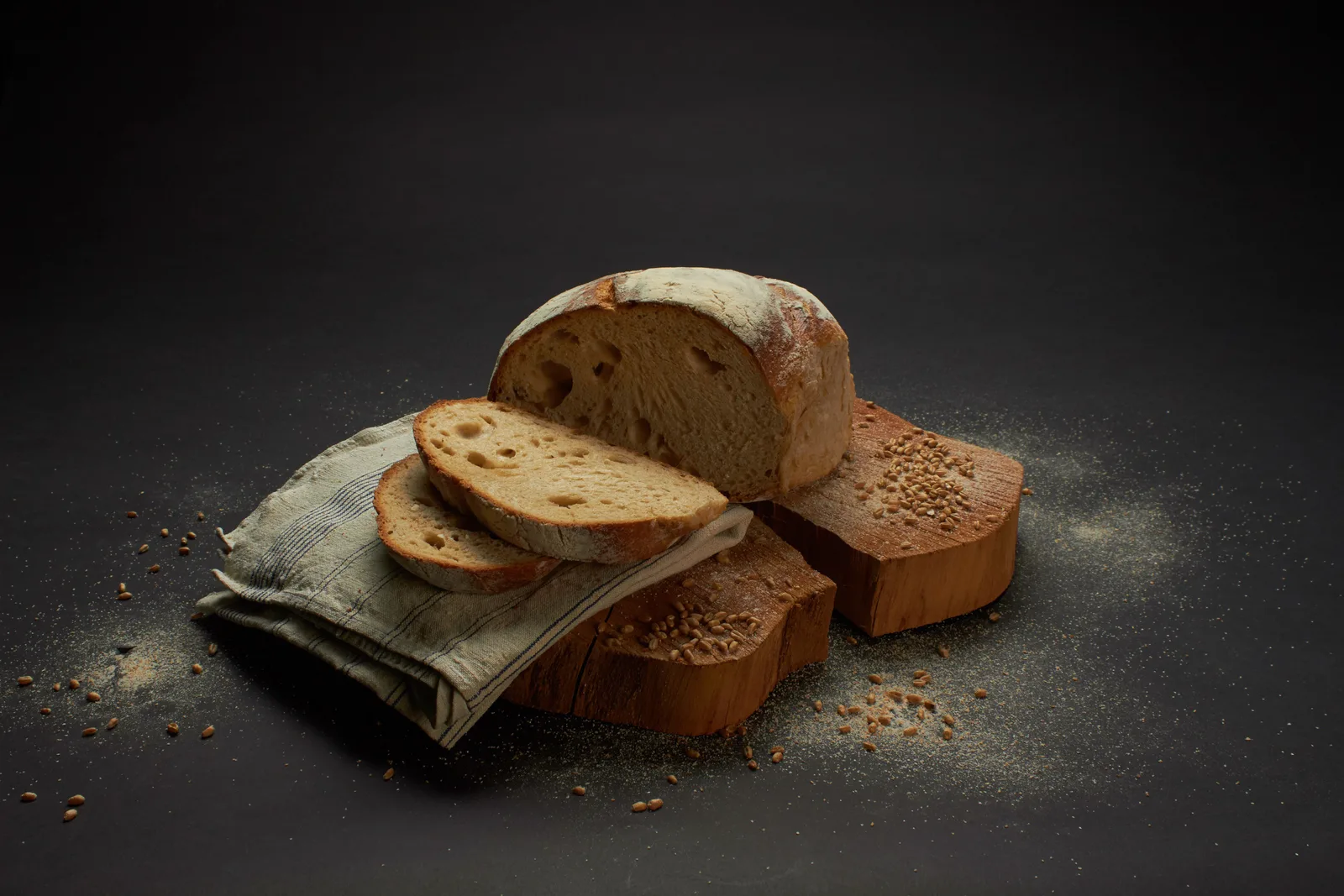
All flour counts.
Baker’s percentages express ingredients as a share of total flour weight. For this calculator, total flour includes the flour inside your starter. Hydration includes its water, too. The calculated starter is part of your formula, not an extra ingredient added on top of the target weight.
Starter flour = total flour × prefermented flour / 100
Starter water = starter flour × starter hydration / 100
Flour to add = total flour − starter flour
Water to add = total flour × hydration / 100 − starter water
The 860 g starting formula
450 g flour, 300 g water, 100 g starter and 10 g salt make 860 g of dough. A 100%-hydration starter contributes 50 g flour and 50 g water. Total flour is therefore 500 g, total water is 350 g, and hydration is 70%. These quantities describe the dough; use your recipe for fermentation and baking steps.
20% starter is not 20% prefermented flour.
This input measures how much of the total flour is inside the starter. At 100% starter hydration, 20% prefermented flour corresponds to starter weighing 40% of total flour. If your recipe uses “20% starter,” check its denominator before entering a value.
Know the limits
This tool handles flour, water, salt and a flour-and-water starter. Oil, eggs, milk, sugar, inclusions and water held in cooked grains need their own accounting. The target is dough weight before baking; moisture loss means the finished loaf weighs less. A mathematically valid formula does not guarantee suitable handling or fermentation.
Try a formula from a trusted recipe before choosing hydration by feel. Record the flour, dough temperature and observations so your next adjustment has a clear reason.
Read next
Sources & method
The equations here are a mass-balance derivation using baker’s percentages. They predict quantities, not readiness or baking results.