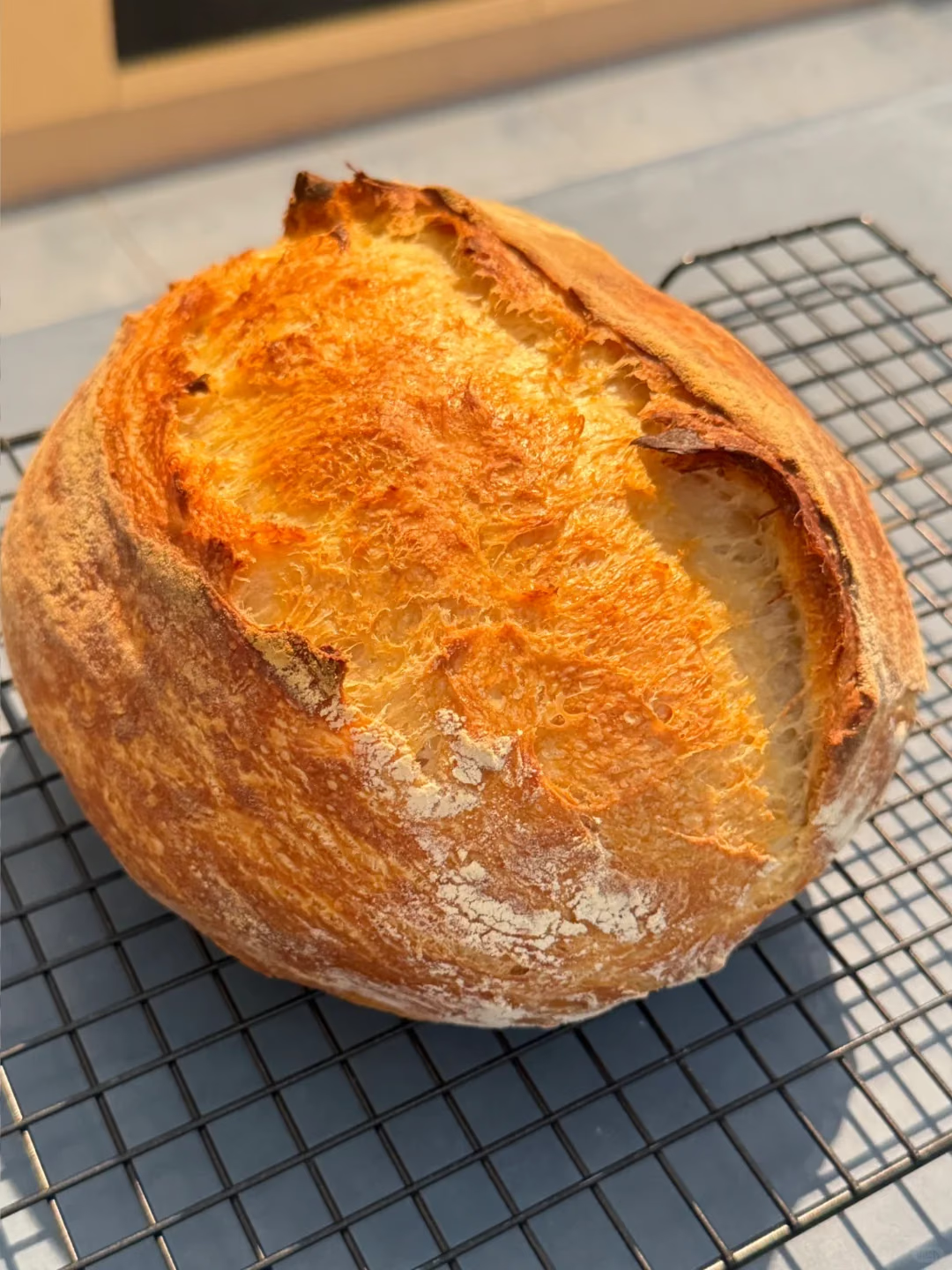
A lean sourdough loaf is flour, water, salt, and ripe starter. The shape is a separate choice: a baguette, a free-standing boule or bâtard, or a pan loaf. This hub compares those choices with enriched dough and sends you to the page that holds the weights. It does not reprint them.
- Lean means no egg, butter, milk, or sugar in the dough.
- Baguette, boule, and pan are shapes. Each one already has a formula page.
- The dough calculator can plan a lean loaf. It cannot plan the fat in brioche.
Lean means the dough, not a vague style
Lean sourdough is the plain dough: wheat flour, water, salt, and a ripe starter or levain. Nothing in the bowl is there to shorten the crumb with fat or to sweeten it. The crust can still be deep, and the crumb can be open or even, depending on fermentation, shaping, and the vessel. Lean is an ingredient list. It is not a promise about holes.
The formulas for that list already exist. French bread is the lean baguette. The basic country loaf is the lean boule or bâtard, with a worked ledger you can type into the dough calculator. The sandwich guide includes a lean pan version and explains, separately, when a published recipe adds butter and milk. Use those pages for the grams. This one helps you pick.
Lean beside enriched
Enriched dough adds egg, butter, oil, milk, or sugar. Those ingredients change strength, browning, keeping quality, and how slowly the loaf rises. Sourdough brioche is the enriched loaf in this library: a soft bread with egg and butter, mixed and chilled on its own terms. An enriched sandwich recipe from a publisher is a second path, and the sandwich guide says not to delete the fat and still expect that softness.
Do not turn a lean baguette into brioche by brushing butter on the crust, and do not turn brioche into French bread by leaving the butter out without rewriting the liquids. Pick the column before you mix. A vegan bake of a lean loaf is still lean. The vegan sourdough loaf page is the one that labels the ingredients and the crust wash. The country loaf page remains the classic free-standing ledger.
| Compared | Lean loaf | Enriched loaf |
|---|---|---|
| In the dough | Flour, water, salt, ripe starter | Those, plus egg, butter, milk, or sugar |
| Crust | Crackly when you bake with steam and cool it uncovered | Softer, and it browns faster |
| Where the weights live | French bread, country loaf, lean sandwich ledger, vegan loaf | Brioche, cinnamon rolls, or the enriched hub that chooses among them |
| Dough calculator | Can plan the whole lean ledger | Use it only for the flour and starter split |
When to pick a baguette, a boule, or a pan
Choose the baguette when you want a lot of crust and you can transfer a long loaf. The French bread recipe is two lean baguettes from one mix, scored on a diagonal and baked with steam. That page owns the weights and the shaping. A bâtard made from the same idea is not a baguette. If you want the round or oval loaf, go to the country loaf and shape a boule or a bâtard for a Dutch oven.
Choose the pan when you want slices that match. The sandwich guide’s lean ledger is flour, water, salt, and starter baked in a tin so the sides stay square. Use it for lunch bread. If the goal is a soft, rich slice, stop and switch to brioche or to an enriched sandwich formula. Forcing a wet country dough into a tin is how you get a rustic crumb that will not hold a filling.
Hydration is the handling clue, not the name of the bread. A baguette you can roll and score usually sits a little drier than a very wet country dough, and a lean sandwich loaf sits lower still so the crumb is closer. French bread on this site is about 68% true hydration. The country loaf page keeps its own ledger. Read the number on the formula you opened. Then, if you need to scale it, use the dough calculator and the hydration guide. If the kitchen is colder or warmer than that formula expected, adjust the clock with the proofing time calculator. Do not average three pages into a new percentage on the bench.
One loaf, then a season
After you know which shape you want, the seasonal calendar tells you when that loaf is the easy one to schedule. Spring favors the lean hearth breads. Summer often wants focaccia and a cold ferment instead of a long warm bulk. Fall is the time to move flour toward whole wheat. Winter is when a cold kitchen and, if you want it, brioche change the day.
Keep the next bake to one change. Repeat the formula page you chose before you raise hydration, swap in whole wheat, and cold-proof overnight on the same dough. The bake log is where that choice is written down. This hub does not need its own gram ledger to do that job.
FAQ
What is a lean sourdough loaf?
A bread made from flour, water, salt, and ripe starter, without egg, butter, milk, or sugar in the dough. Baguettes, country boules, and a lean pan loaf are all lean. Brioche is not.
Where is the French bread formula?
On the French bread recipe, which is the lean baguette. This hub only helps you decide that a baguette is the shape you want. It does not restate that formula.
Should I bake a boule or a pan loaf?
Bake a boule or bâtard from the country loaf guide when you want a free-standing crusty loaf. Bake the sandwich guide’s pan formula when you want even slices. Use brioche when you want a soft enriched crumb.
Can the dough calculator plan brioche?
No. It plans flour, water, salt, and a flour-and-water starter. Lean loaves fit. Butter, eggs, milk, and sugar have to come from the enriched recipe.
Sources & further reading
This guide combines published references with our own explanations and decision aids. Numerical examples are illustrative; they are not records of Sourdough Bench test bakes.
Put it into practice.
Keep the recipe, observations and next change together in your downloadable bake log. For a symptom-led starting point, use the loaf troubleshooting guide.
Keep reading
- Enriched Sourdough: Brioche, Cinnamon Rolls, or Soft Slices
- Basic Sourdough Country Loaf: A Lean Formula You Can Repeat
- Sourdough Sandwich Loaf: Pan Formula, Hydration and Slice Texture
- Sourdough Hydration Explained: Percentages & Examples
- Baker’s Percentage for Sourdough: Formula & Worked Example
- What to Bake Each Season with Your Sourdough Starter