Vegan Sourdough Loaf: No Dairy, No Eggs
A vegan sourdough bâtard of flour, water, salt, and ripe starter. No dairy, no eggs, and no egg wash, with a ledger that is not the country loaf.
View saved recipes · Saved on this device.
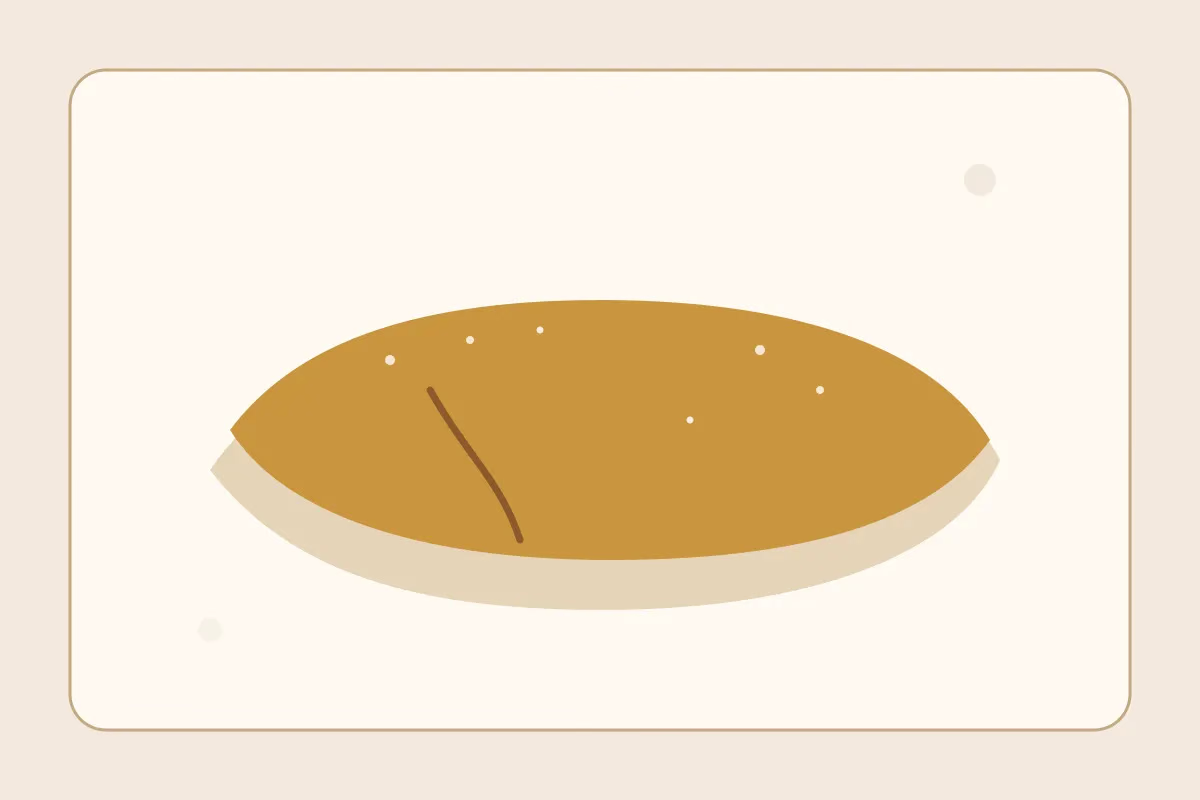
This vegan sourdough loaf is a lean bâtard: bread flour, water, salt, and ripe starter. Nothing in the formula is milk, butter, honey, or egg, and the crust is not brushed with an egg wash. The weights are a 704 g planning dough at 74% hydration and 12% prefermented flour. They are not a Sourdough Bench test bake.
The country loaf guide owns the classic free-standing ledger, a different hydration and a different preferment. Bake that one when you want the standard country formula, and simply keep dairy and egg off the crust if the loaf must stay vegan. Bake this one when you want the vegan label, the wash alternatives, and these grams. French bread is the lean baguette, also free of dairy and eggs if the starter was fed only flour and water. The prep and cook times here are hands-on work and the bake. Bulk and the final proof add hours and depend on dough temperature. A cold kitchen lengthens both. Use the proofing time calculator when the dough is not at the temperature you planned, and still stop at the rise.
Vegan Sourdough Loaf: No Dairy, No Eggs
- Makes
- 1 bâtard
- Prep · estimate
- 40 min
- Cook · estimate
- 42 min
- Total · estimate
- 82 min
Ingredients
- 352 g white bread flour, plus flour for the bench and the basket
- 248 g water, cool or at the temperature you calculated
- 96 g ripe sourdough starter at 100% hydration (48 g flour and 48 g water)
- 8 g fine salt
Method
Check the jar and the vegan ledger
The starter has to be flour and water only. A starter fed with milk, or a dough brushed later with egg, is not this loaf. Total flour is 400 g. Total water is 296 g, which is 74% hydration. Salt is 8 g, 2% of total flour. Prefermented flour is 48 g, 12% of total flour. At 100% starter hydration you weigh 96 g of starter. The flour you add is 352 g. The water you add is 248 g. Together with the salt, the dough weighs 704 g before baking. If your starter is stiffer or thinner, split it in the dough calculator and change the water you add so those totals stay put.
Mix, rest, then add the salt
Stir the starter into the water. Add the flour and mix until no dry flour remains. Rest 20 to 30 minutes, then sprinkle on the salt and squeeze it through until the dough is cohesive. It will feel tacky at 74% hydration with bread flour. Write down the dough temperature. This is the start of bulk. You are not waiting on an egg or a block of butter, because this dough does not have them.
Fold during bulk
Cover the dough and leave it somewhere steady, warmer than a cold winter counter if the room is chilly. During the first half of bulk, give it three or four stretch-and-folds or coil folds, about 30 minutes apart, until it holds a better shape. Bulk is finished when the dough is aerated, expanded, and stronger than at the mix. A warm kitchen may be ready in roughly 3 to 4 hours. A cool kitchen takes longer. Do not bake it only because the clock you copied from another formula has run out.
Preshape and shape one bâtard
Turn the dough out onto a lightly floured bench. Preshape it into a loose round, cover it, and rest 15 to 25 minutes. Shape an oval bâtard with the seam underneath. The country loaf guide is the shaping reference if you want a boule from a different formula. This dough is sized as one bâtard for a basket and a Dutch oven. Set it seam-up or seam-down to match the way you will score, and flour the liner so it releases. The flour is for the cloth, not a second handful worked into the dough.
Proof, and choose a vegan finish
Cover the loaf and proof until it looks fuller and a floured finger at the edge springs back slowly. That may be about 45 to 90 minutes at room temperature, or an overnight cold proof if you need the morning. Leave the skin matte. Do not brush it with egg, milk, cream, honey, or melted butter. For a slight sheen that stays vegan, mist the top with water just before it goes into the oven. A teaspoon of cornstarch stirred with two teaspoons of water, then brushed on thinly, is another vegan shine. Skip both if you want the flour-dusted crust. Oil on the crust is vegan and will soften it. If you use oil, write that down, because it is no longer the plain four-ingredient bake.
Score, steam, and bake
Heat the oven to 230°C / 450°F with a Dutch oven inside, or with a stone and a pan you trust for steam. Score one long slash or two shorter slashes with a sharp blade. Load the loaf and bake covered, or with steam, for about 20 minutes. Uncover or vent the steam and bake about 18 to 22 minutes more, until the crust is deep gold and the loaf sounds settled when tapped. Cool on a rack until the center is no longer warm before you slice. A hot crumb looks gummy even when the bake was long enough.
Developed for home use; not kitchen-tested by Sourdough Bench. Times are estimates; use the doneness cues in the steps.
Small things that help
- This is not the country loaf ledger
- The country loaf page is the classic lean formula for a boule or bâtard. These grams are a smaller, slightly wetter dough with more of the flour already fermented in the starter. Keep one bake on one page. Linking the two is not permission to copy both sets of weights into the bowl.
- Put the four numbers in the dough calculator
- Enter about 704 g dough, 74% hydration, 2% salt, and 12% prefermented flour with a 100% hydration starter. Check that the grams match this list before you mix. The calculator does not add a wash, and it should not be asked to.
- Whole wheat is a planned swap
- Replace 80 g of the weighed white flour with whole wheat flour on a later bake, and keep the water the same the first time. Read the whole wheat guide before you push the share higher. That change is no longer this white-flour loaf.
Make it your own
- Bake it as a round boule
- The formula can be shaped round if your pot is round. Shaping does not change the vegan ingredients. The country loaf guide covers boule shaping for its own ledger.
- Cold-proof the shaped loaf
- After shaping, cover it and refrigerate it if you will bake in the morning. Score it cold, or wait a few minutes if the skin is very tight. Use the overnight schedule rather than leaving it on the counter unattended.
- Need a long crusty loaf instead
- Use the French bread recipe for two baguettes. It is also a lean dough. It is not this bâtard, and its weights stay on that page.
Make ahead & storage
Cool the bâtard on a rack until it is no longer warm. Keep it cut-side down on a board for the day you bake it, or freeze it wrapped once cool. Do not seal it in plastic while hot. A damp bag is how a vegan loaf molds just as fast as any other lean bread. Heat a stale loaf in a hot oven for a few minutes if the crust has softened. Throw it away if you see mold. Trimming a spot is not enough.
Dietary notes
Why this loaf is vegan
The dough is flour, water, salt, and a flour-and-water starter. It has no milk, butter, honey, or egg. Keep the crust wash vegan too: flour, water, or a cornstarch slurry. Oil is plant-based if you choose it, and it changes the crust. Check that your salt and flour have no additives you need to avoid. This page is an ingredient label, not an allergy certificate.
Before you start
Is a vegan sourdough loaf just a country loaf?
A classic country loaf is often vegan if the starter is flour and water and you skip egg wash, milk, and honey. That formula lives on the country loaf guide. This page uses a different ledger, 704 g at 74% hydration and 12% prefermented flour, and it spells out the washes that would break a vegan label.
What can I use instead of an egg wash?
Nothing, if a matte floury crust is fine. A mist of water, or a thin cornstarch slurry, adds a little shine and stays free of eggs and dairy. Skip milk, cream, honey, and melted butter.
Does the starter have to be vegan?
Yes for this loaf. Feed it with flour and water only. A culture that has been refreshed with milk is a different starter.
Can I add seeds or whole wheat?
Seeds on the crust, or a measured swap of whole wheat for some of the white flour, can stay vegan. Change one thing, and read the whole wheat guide before a large swap. Do not add honey to make the crust brown.
Sources & inspiration
- The Perfect Loaf: Beginner’s sourdough bread
A published lean loaf method. Their formula is not this 704 g ledger. Use one method at a time.
- King Arthur Baking: Baker’s percentage
The percentage language used to build the 400 g flour ledger.
- King Arthur Baking: Bread hydration
Why the 74% figure counts water in the starter, not only water in the bowl.
- USDA FSIS: Molds on food
Why a moldy loaf is thrown away rather than trimmed, vegan or not.
Recipe writing and serving illustrations are created for Sourdough Bench. Inspiration credits identify the source of an idea; they do not imply that another author tested this recipe. How we publish.


