White Bean Kale Toast on Sourdough
White bean kale toast with lemon, garlic and whole-grain sourdough. Mash some of the beans for a creamy base and leave the rest whole.
View saved recipes · Saved on this device.
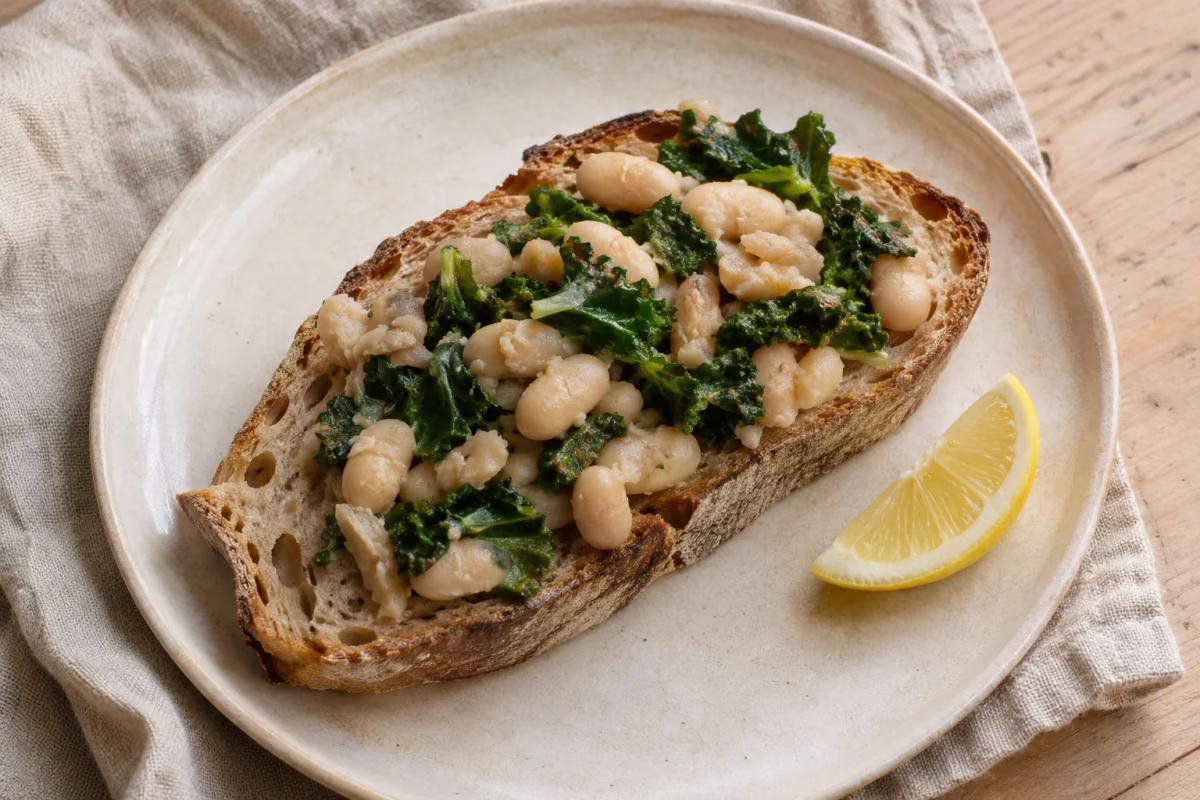
White bean kale toast turns a drained can of beans and a handful of greens into a warm lunch. Crushing only part of the beans gives the topping enough body to stay on the bread while leaving some beans intact. Lemon goes in at the end so its flavor stays clear.
The key is keeping the pan mixture moist but not soupy. Tough kale stems and excess bean liquid make an otherwise simple toast awkward to eat, so strip the stems and measure the water before you start. The quantities below make two generous open toasts.
White Bean Kale Toast on Sourdough
- Makes
- 2 servings
- Prep · estimate
- 10 min
- Cook · estimate
- 12 min
- Total · estimate
- 22 min
Ingredients
- 2 large slices (120 g total) whole-grain sourdough, made without animal ingredients
- 240 g drained weight canned cannellini beans, rinsed and drained
- 120 g prepared weight kale leaves, tough stems removed
- 2 tsp (10 ml) olive oil
- 1 small clove (3 g) garlic, finely chopped
- 3 tbsp (45 ml) water, plus a little more only if needed
- 2 tsp (10 ml) lemon juice
- ¼ tsp finely grated lemon zest
- ⅛ tsp fine salt, or to taste
- 1 small pinch black pepper
Method
Prepare the greens
Wash and dry the kale, then cut it into short thin ribbons. Pat the rinsed beans dry. Set aside half the beans and roughly mash the other half with a fork; a few lumps help the topping keep its shape.
Wilt the kale
Warm the oil in a wide skillet over medium heat. Add the garlic and stir for 30 seconds without browning it. Add the kale and measured water. Cover for 3–4 minutes, then uncover and stir until the leaves soften.
Warm the beans
Add both the mashed and whole beans, salt and pepper. Cook gently for 3–4 minutes, stirring. The mash should hold together on a spoon. Add a teaspoon of water if it catches, or cook uncovered a little longer if liquid pools.
Toast and finish
Toast the sourdough while the beans heat. Remove the skillet from the heat and stir in the lemon juice and zest. Divide the mixture between the two slices, leaving some crust visible. Serve immediately with a knife and fork.
Developed for home use; not kitchen-tested by Sourdough Bench. Times are estimates; use the doneness cues in the steps.
Small things that help
- Make white bean kale toast easier to eat
- Cut kale ribbons across again if they are very long. Short strands stay in the topping rather than pulling away with the first bite.
- Adjust at the end
- Canned beans vary in saltiness. Taste the hot mixture after the lemon goes in before deciding whether it needs another pinch of salt.
Make it your own
- Use spinach
- Replace the kale with 120 g spinach and use just 1 tablespoon of water. It wilts quickly, so uncover as soon as it collapses.
- Use butter beans
- Use the same drained weight. Mash them a little more firmly because their larger size makes the whole beans easier to knock off the toast.
Make ahead & storage
Store the bean topping separately and use within 2 days for best texture. Chill promptly at 4°C/40°F or below; reheat until steaming and toast fresh bread. Follow any shorter package limit.
Dietary notes
A plant-based lunch
Beans, greens and whole grains offer variety in a plant-forward meal.
Ingredients to check
Contains wheat. Use bread without milk, eggs or honey to keep the listed recipe vegan.
Before you start
Can I use dried beans?
Yes, if they are already fully cooked. Measure 240 g after cooking and draining. The recipe time does not include soaking or cooking dried beans.
Why is the topping sliding off?
It is usually too wet or the bread is too narrow. Mash a few more beans into the mixture, let extra water evaporate and use broad slices.
Sources & inspiration
- WHO: Healthy diet
Background on varied food groups; not a nutrition analysis or endorsement of this recipe.
- FDA: Are you storing food safely?
Refrigeration and prompt storage guidance.
Recipe writing and serving illustrations are created for Sourdough Bench. Inspiration credits identify the source of an idea; they do not imply that another author tested this recipe. How we publish.


