High-fiber breakfast ideas with sourdough
High-fiber breakfast ideas with whole-grain sourdough, beans, fruit, nuts and seeds. Try three beans-on-toast variations and learn how to compare fiber labels.
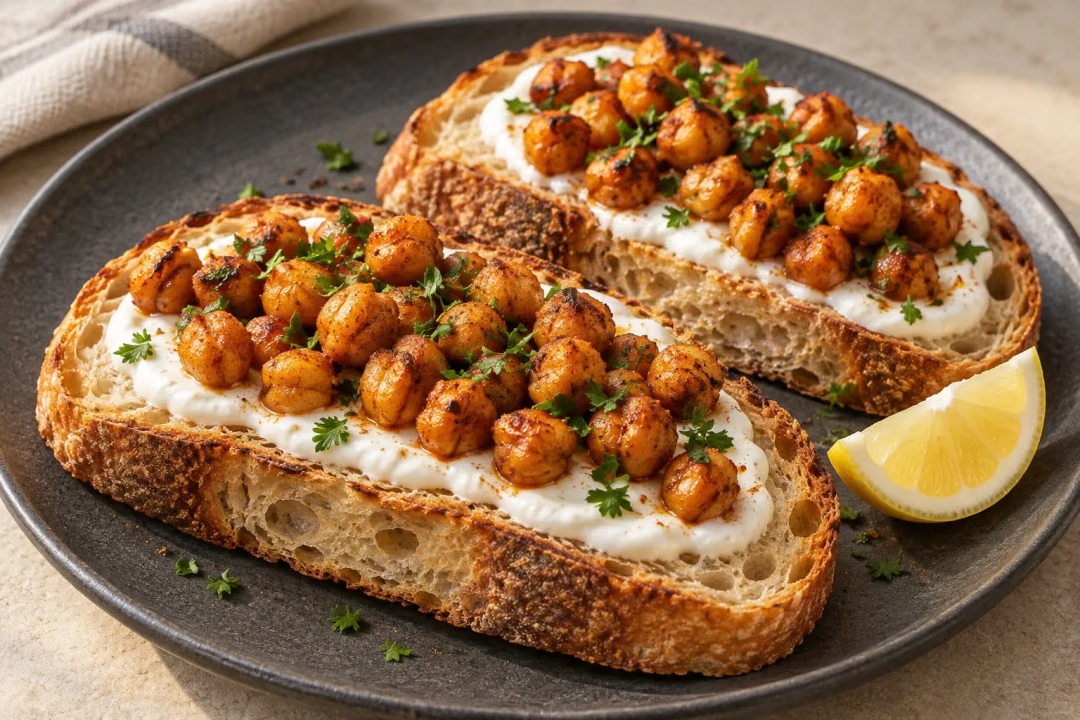
A high-fiber breakfast starts with what is in the loaf and what you put beside it. Choose a whole-grain sourdough, then add a substantial plant topping: chickpeas, peas, avocado or fruit. A spoonful of nuts or seeds can bring another texture to the plate.
The ideas here adapt our existing recipes. They help you add fiber through ordinary foods, with the ingredient choices spelled out below. Exact fiber totals depend on your bread, products and portions; the original recipes do not have measured nutrition values.
Build a high-fiber breakfast in three parts
Use this as a flexible starting point for one person. Spread what fits comfortably on the bread and serve the rest alongside it. A broad slice does not need a tower of toppings to make a useful breakfast.
Whole grains, legumes, fruit, vegetables and nuts are among the fiber-containing foods listed by NIDDK. Combining a few of them gives you more options than relying on bread alone.
- Start with one slice of whole-grain sourdough, around 50–60 g, or a portion that suits your appetite. Check the loaf’s ingredients and fiber label.
- Add a main plant topping: about 100 g drained chickpeas, 75 g avocado, or 100–150 g fruit. These are alternative food portions, not nutritionally equivalent swaps.
- Finish with 10–15 g unsalted nuts or a small spoonful of ready-to-eat ground flaxseed, if you enjoy them. Add yogurt, an egg or another protein food as desired; the fiber comes from the plant ingredients.
Beans on sourdough toast: three breakfast ideas
Beans on sourdough toast can be creamy, crunchy or fresh and green. Whole Foods Market included a focus on beans in its 2027 trend forecast, published October 14, 2026, and highlighted renewed interest in beans on toast. That gives this familiar breakfast a timely reason to revisit. Read the retailer’s forecast.
For a high-fiber breakfast built around beans, choose whole-grain bread and use a substantial bean portion. The three recipes below offer different methods; compare your actual ingredients and portions if you need a fiber total.
- Roasted chickpea and yogurt toast: drain the chickpeas well, roast until dry at the edges and add them to the yogurt just before eating.
- Black bean and egg toast: warm and partly mash the beans so they stay on the bread, then add the cooked egg.
- Edamame and avocado toast: cook the shelled edamame according to its package, then mash with avocado for a chunky green spread.
Choose the loaf by its ingredients
Look for whole-wheat or whole-grain flour near the beginning of the ingredient list. A dark crust, brown crumb or a scattering of seeds is not enough to identify a whole-grain bread. The American Heart Association explains why the ingredient list is more useful than color.
Sourdough describes the fermentation, while whole grain describes the grain ingredients. A white-flour sourdough and a whole-wheat sourdough can both taste tangy, yet have different fiber contents. If you bake your own, keep track of the flour blend; our flour guide explains how whole-wheat and white flours behave.
For toast, cut a slice thick enough to hold the topping, then toast it until the surface is crisp. Drain beans well and pat washed berries dry. This keeps the crust from turning soft before you sit down.
Read the fiber number for your actual portion
The FDA’s label guide explains that nutrition information is tied to the stated serving size. Compare bread labels on the same basis: a large artisan slice may weigh more than the slice described on a package.
For a packaged ingredient, use: fiber in your portion = fiber per labeled serving × your portion weight ÷ labeled serving weight. As an arithmetic example only, a label showing 2 g fiber per 40 g would give 3 g in a 60 g portion. Those example values are not a nutrition measurement of our sourdough.
For the whole breakfast, repeat the calculation for each labeled ingredient and add the results. For fresh produce, use an appropriate food-composition entry for the edible portion and record it. A light sprinkling of seeds should not stand in for checking the loaf and the rest of the meal.
Make it an easy routine
Keep sliced bread in the freezer, a tin of chickpeas in the cupboard and fruit you actually like in the kitchen. Alternate a savory bean toast with a fruit-and-yogurt breakfast. You can repeat the same base and change the flavor with lemon, dill, cinnamon or smoked paprika.
If your usual breakfast contains little fiber, add one change at a time rather than every topping at once. NIDDK recommends increasing fiber gradually and drinking enough fluids. The aim is a comfortable routine, not to reach a whole day’s intake in one sitting.
Assemble toast just before eating. Keep prepared beans, yogurt and other perishable toppings refrigerated at 4°C/40°F or below, and follow their package and recipe storage instructions. The FDA’s two-hour rule becomes one hour when the temperature is above 32°C/90°F.
10 breakfasts to make your own
Use the notes below for this guide’s portions and ingredient choices. The recipe links open the original versions.
Paprika Chickpea and Yogurt Sourdough Toast
For one: use one 60 g slice of whole-grain sourdough, 100 g drained chickpeas and 80 g plain Greek yogurt, following half the original recipe. Mash a few chickpeas into the yogurt to anchor the topping; serve any extra chickpeas alongside.

Pear, Walnut and Yogurt Sourdough Toast
Use the whole-grain bread option and half the two-serving recipe: one 60 g slice, 80 g yogurt, about 90 g pear and 10 g walnuts. Leave the washed pear skin on if you like its texture. Honey is optional.

Flaxseed, Honey and Yogurt Sourdough Toast
For one: choose one 60 g whole-grain slice with 90 g yogurt, 7 g ready-to-eat ground flaxseed and 10 g walnuts. Mix the flaxseed into the yogurt so it stays on the toast. Follow the seed package’s preparation and storage directions.

Avocado and Lime Yogurt Sourdough Toast
Use one whole-grain slice and half the original topping: about 75 g avocado and 75 g yogurt. For a bean variation, replace half the avocado with the same weight of drained, mashed white beans; keep the lime for brightness.

Fruit Yogurt Bowl with Cinnamon Sourdough Croutons
The original already uses whole-grain bread. For one bowl, halve its quantities: 40 g bread, 200 g yogurt and 125 g mixed fruit. Include the optional walnuts if you want crunch, and add the croutons only when ready to eat.

Shrimp, Avocado and Pea Sourdough Tartine
For a savory brunch, switch the original 80 g bread slice to whole-grain sourdough and keep its avocado, peas and berry side. The shrimp supplies protein; the plant ingredients are the reason this recipe belongs in a fiber-focused collection.

Edamame Avocado Toast on Sourdough
Mash cooked shelled edamame with avocado for a green spread. Use whole-grain sourdough and follow the package directions for the beans.

Black Bean Egg Toast on Sourdough
A warm black-bean mash anchors a cooked egg, tomatoes and cilantro. Choose whole-grain sourdough and serve the lime on the side.

Chia Yogurt Bowl with Raspberry and Sourdough Dippers
Hydrate chia in yogurt in the refrigerator before adding raspberries. The recipe includes the two-hour soak; toast the bread at serving time.

Prune Ricotta Toast with Walnuts and Cinnamon
Soften dried prunes, cut them into pieces and add them to ricotta toast with walnuts. Use whole-grain bread if you want another whole-grain option.
Breakfast questions
Is every sourdough bread high in fiber?
No. The flour blend and recipe matter. Choose a loaf with whole-grain ingredients and check its fiber content per portion. Fermentation alone does not establish the fiber amount.
What does fibermaxxing mean for breakfast?
It is a social-media term for deliberately increasing fiber intake. For this guide, the practical part is choosing more whole grains, beans, fruit, vegetables, nuts and seeds. You do not need to maximize the amount in one meal; increase it gradually.
Can I make these dairy-free?
Yes. Use mashed beans, hummus or a plain dairy-free yogurt you enjoy as the spread. Check its ingredient and nutrition labels: plant-based yogurts differ substantially. Choose nut-free toppings as well if needed for an allergy.
Does high fiber mean low GI or guaranteed weight loss?
No. Fiber content does not establish the glycemic index of a finished meal, and this collection does not promise a weight-loss result. The bread, topping quantities and the rest of your diet all matter. See our guide to sourdough and nutrition for the distinctions.
Which beans work for beans on sourdough toast?
Chickpeas roast well, black beans make a useful warm mash, and cooked shelled edamame works in a green spread with avocado. Use canned or fully cooked beans for these versions and drain them well. A mash or thick spread helps keep loose beans on the bread.
Sources behind this guide
These references support the ingredient guidance and food-safety notes. The breakfast combinations and weekly plan are Sourdough Bench’s editorial suggestions.
- American Heart Association — Get to Know Grains
Reviewed June 25, 2024. Supports the distinction between whole and refined grains and checking ingredients rather than bread color. It does not provide nutrition values for our recipes.
- NIH / NIDDK — Eating, Diet, & Nutrition for Constipation
Reviewed May 2018. Used for fiber-containing food groups, gradual increases and appropriate fluid intake. This breakfast collection is not a treatment plan for constipation.
- FDA — How to Understand and Use the Nutrition Facts Label
Supports comparing a label’s stated serving size with the amount eaten. The worked example above demonstrates arithmetic; it is not a tested bread value.
- FDA — Are You Storing Food Safely?
Supports the refrigerator temperature and two-hour/one-hour limits for perishable ingredients. Follow each recipe and product label for its storage duration.
- Whole Foods Market: 2027 food trend predictions — The Bean Boom
Published October 14, 2026; checked October 24, 2026. A retailer’s trend forecast highlighting beans, legumes and beans-on-toast variations. Used for editorial topic context, not keyword volume or nutritional assessment.
This guide has not been reviewed by a registered dietitian; linked recipes have not been kitchen-tested by Sourdough Bench. Ingredient weights are suggested food portions, not measured nutrient values. Our editorial policy.