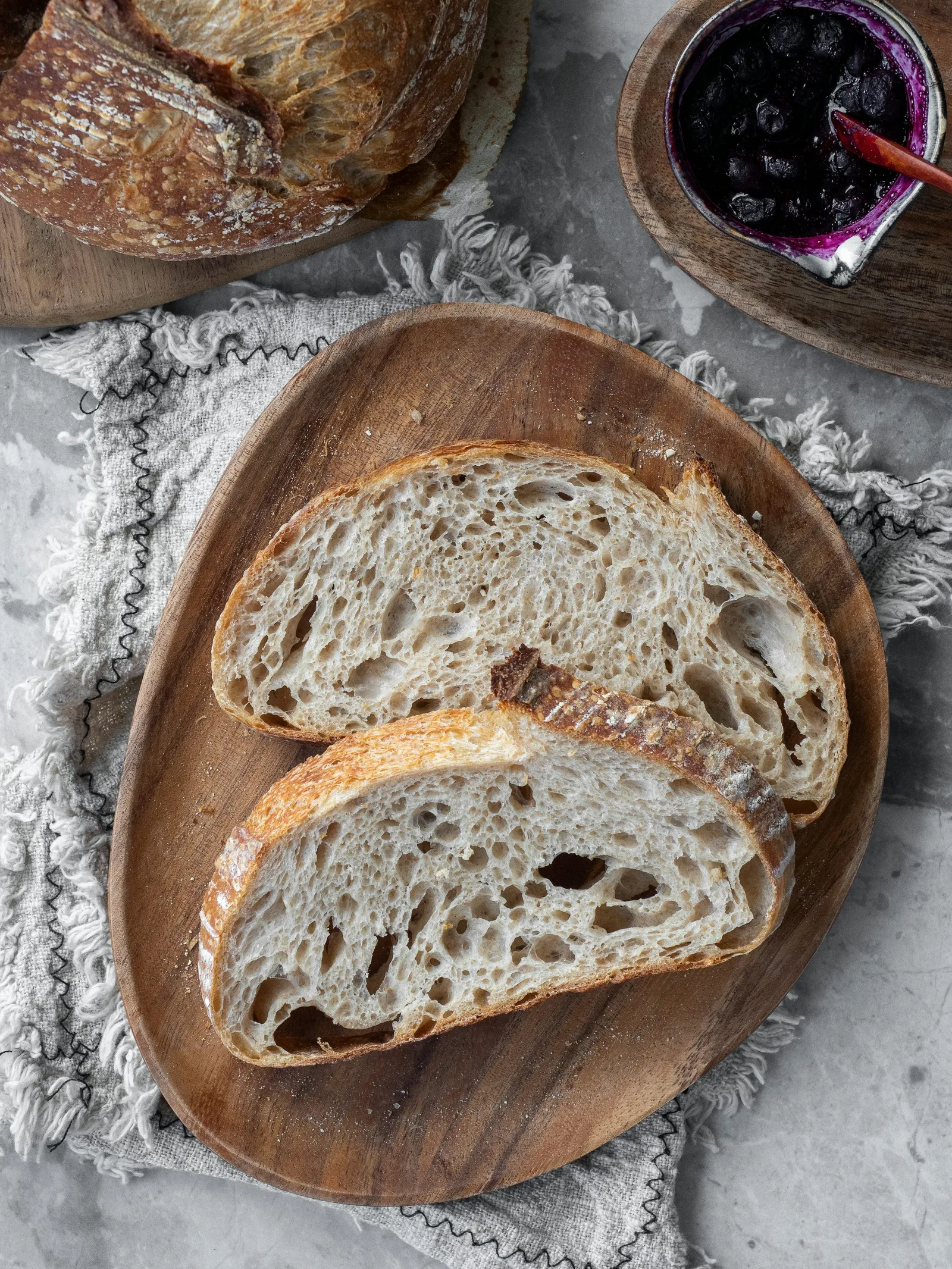
A crackling crust is a good reason to love sourdough. Its slow fermentation is interesting, too: yeast, bacteria and enzymes change the dough before baking. Those changes can offer useful benefits, while the flour, recipe, portion and person eating it still shape the bigger picture.
Fermentation gets a head start.
During a traditional sourdough fermentation, microbes can break down some fructans: carbohydrates in wheat that can trigger digestive symptoms in some people. That may make certain loaves easier to tolerate.
The flour, culture and serving size matter, as Monash explains. A sourdough label cannot guarantee a comfortable stomach. Ordinary wheat sourdough still contains gluten and is not suitable for people with celiac disease.
A little more from the grain.
Grain contains minerals alongside phytate, a compound that can bind them. The acidity developed during fermentation helps grain enzymes break down some phytate.
That is a promising part of the process, especially with wholegrain flour. Research showing lower phytate in dough, however, does not guarantee that you will absorb more minerals from a particular slice.
Your response is personal.
Fermentation can change the bread you eat, including its acidity. The blood-sugar response also depends on the recipe, portion and person. In a randomized bread trial, the bread producing a lower response differed between participants.
Choose the whole meal thoughtfully. The word “sourdough” alone does not establish a low glycemic index or promise steady blood sugar.
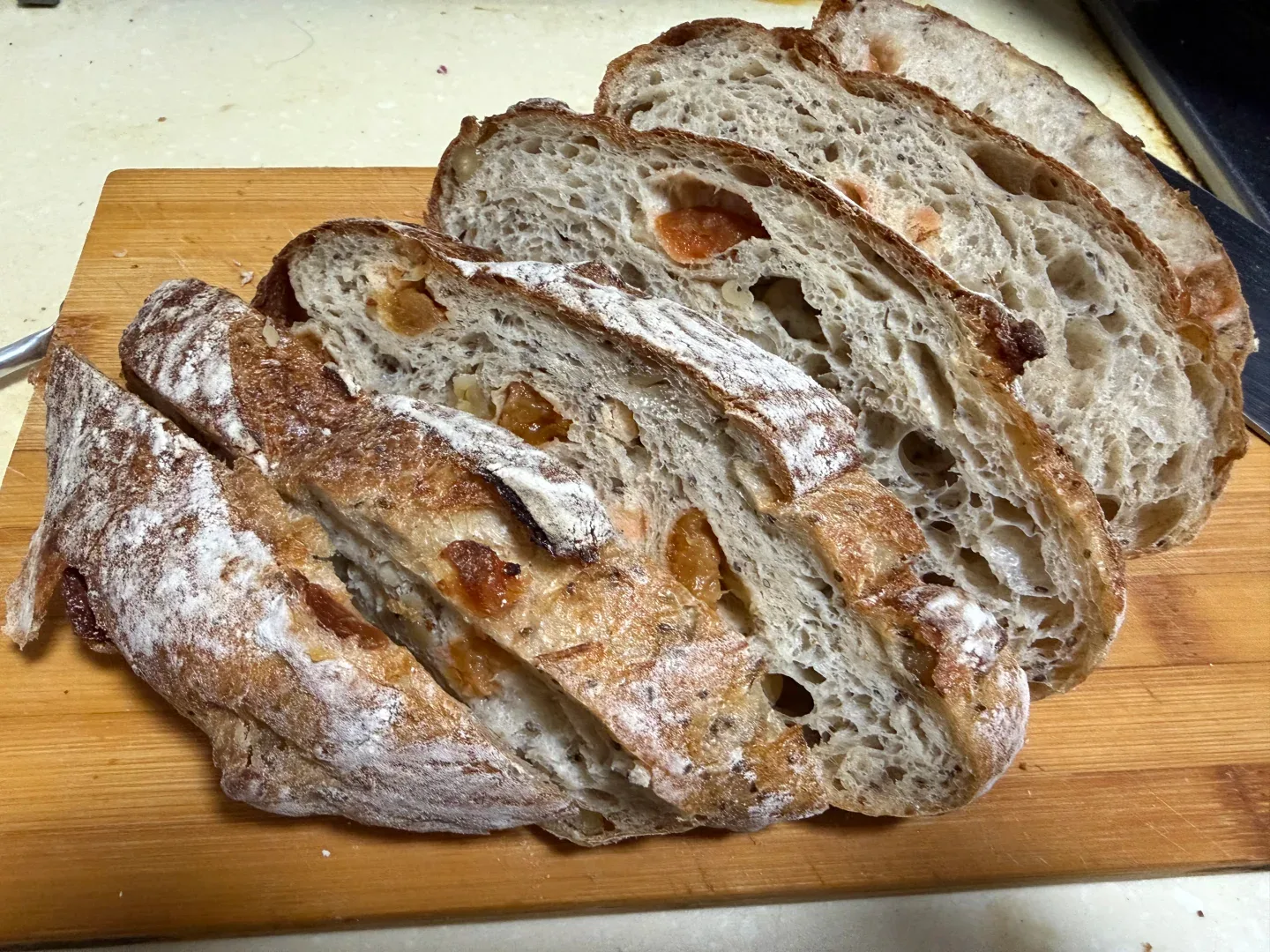
Build the loaf around good ingredients.
Wholegrain flour brings fibre to your bread. Fermentation adds another layer of flavour and changes the dough’s chemistry along the way.
Baking kills the starter’s live cultures, so a finished sourdough loaf is not a source of live probiotics. The starter does its work in the dough; the baked loaf brings the flavour and texture to your plate.
You can keep it simple.
Flour, water, salt and starter can make a lovely loaf. Baking at home lets you choose your flour blend, weigh the salt and decide which additions you enjoy.
For a bought loaf, read the ingredients and nutrition label. A short ingredient list is useful information, while fibre, salt and portion size also deserve a look.
There is something in the tang.
Acids produced during fermentation help develop sourdough’s flavour and can contribute to a longer shelf life. The result varies with the culture, recipe and storage conditions.
Let your loaf cool before storing it, and freeze spare slices for another breakfast. Good keeping habits help you enjoy the bread you worked patiently to make.
Make a loaf you enjoy eating.
Start with a recipe you like and get to know its flour, timing and serving size. Try a little wholegrain flour if it suits your recipe, and keep notes on the flavour and texture. Sourdough can be a satisfying everyday food. Its best qualities come from the whole loaf and the way you eat it.
A little more context & sources
The phytate study below measured changes in whole-wheat dough in vitro. The 2017 bread trial found no significant overall difference in the measured clinical outcomes between its two breads; individual glycemic responses varied.
Di Cagno and colleagues’ 2004 study used selected bacteria and cell extracts, a special flour mixture containing 30% wheat, and controlled fermentation. Its acute challenge in 17 people with celiac disease measured intestinal permeability. It does not establish the long-term safety of ordinary wheat sourdough for people with celiac disease.
- Monash FODMAP: Fermentation, fructans and sourdough
- Leenhardt and colleagues, 2005: Sourdough acidity and phytate breakdown
- Korem and colleagues, 2017: Bread and personal glycemic responses
- ISAPP: Fermented foods and probiotics
- Beyond Celiac: Sourdough and gluten
- Di Cagno and colleagues, 2004: An experimental sourdough process