High-Protein Breakfast Ideas with Sourdough
Build a protein-focused sourdough breakfast with eggs, Greek yogurt, cottage cheese or beans, practical serving notes and sweet and savory recipe ideas.
For a high-protein breakfast, start with the topping: a bowl of Greek yogurt, cottage cheese, eggs, chickpeas or tuna. Sourdough gives these ingredients a crisp base or something to dip. The bread's name alone does not tell you how much protein your breakfast contains.
These ideas use existing Sourdough Bench recipes, with serving notes and specific additions where useful. They are practical meal combinations, without calculated protein totals. Some original recipes use only a small spoonful of dairy; follow the changes below if you want that ingredient to play a bigger part.
Choose the protein ingredient first
For one high-protein breakfast, try 200 g plain Greek yogurt with berries and toast, or two eggs with 100 g cottage cheese and tomatoes. For a vegetarian savory plate, pair 100 g drained chickpeas with 150 g Greek yogurt. These are starting combinations, not interchangeable nutritional portions or a personal protein prescription.
Keep fruit or vegetables on the plate and choose bread you enjoy. A whole-grain sourdough works well with both sweet and savory toppings. Harvard's Nutrition Source emphasizes considering the fiber, fats and sodium that accompany protein, and varying the foods it comes from. That is a useful reason to alternate eggs and dairy with beans, nuts or fish. Read the protein guidance.
- Sweet and easy: Greek yogurt, berries and lemon zest, with the toast alongside if the topping is generous.
- Savory and warm: scrambled eggs, cottage cheese and chopped tomato; add the cold cheese after cooking.
- Vegetarian and egg-free: chickpeas, thick yogurt, paprika and parsley. Dairy-free eaters can use tofu or a suitable soy yogurt; check its label before treating it as an equivalent swap.
Check the portion, then the label
Compare the protein listed for the amount you will actually eat. A yogurt label may describe one small pot, while a recipe calls for half a larger tub. Cottage cheese, Greek-style yogurt and plant-based alternatives also vary between products. Look at the serving weight and protein together, and include the bread and other ingredients if you calculate a meal total. The FDA explains that nutrition figures apply to the stated serving size; that size is not a recommendation for how much to eat. How to read the label.
A scattering of seeds or a thin smear of yogurt can add flavor without being the main protein portion. Put the larger serving in a bowl beside the toast when it becomes difficult to pile on. This keeps the quantities clear and the bread easier to eat.
Prepare components, assemble at breakfast
The night before, portion the yogurt, wash and dry berries, and slice bread for the freezer. Cook eggs ahead for the egg-salad option, following the recipe's cooling and storage directions. Keep wet fillings separate from bread. For a fast warm breakfast, have the tomato chopped before you start scrambling; for a cold breakfast, use the yogurt bowl and add its croutons last.
Refrigerate perishable ingredients at 4°C/40°F or below. Return them to the refrigerator within two hours, or one hour when the temperature is above 32°C/90°F. Follow the shortest storage limit among the ingredients and the linked recipe; preparing a topping does not extend an ingredient's remaining life. FDA refrigeration guidance.
12 breakfasts to make your own
Use the notes below for this guide’s portions and ingredient choices. The recipe links open the original versions.

Asparagus and Mushroom Egg Toast on Sourdough
Warm and savory. The original serves two with one egg per toast. For a larger protein portion, cook two eggs per person or serve 150 g plain Greek yogurt alongside; check the products and portions if calculating a total. Brown the mushrooms before adding the asparagus.

Berry Greek Yogurt Sourdough Toast
Sweet, vegetarian. The recipe makes two toasts with 100 g yogurt each. For one breakfast, use one toast and 200 g plain Greek yogurt in total: spread half on the bread and serve half alongside. Add 75 g mixed berries (25 g each of blueberries, raspberries and strawberries) and, optionally, 7.5 g walnuts.

Cottage Cheese Toast with Blueberries and Avocado
Sweet-salty, vegetarian. The original two-toast plate uses 50 g cottage cheese on one slice. For this version, increase it to 150 g total, dividing it between both toasts or serving some beside them. Keep the blueberries and avocado; drain the cheese before spooning it on.
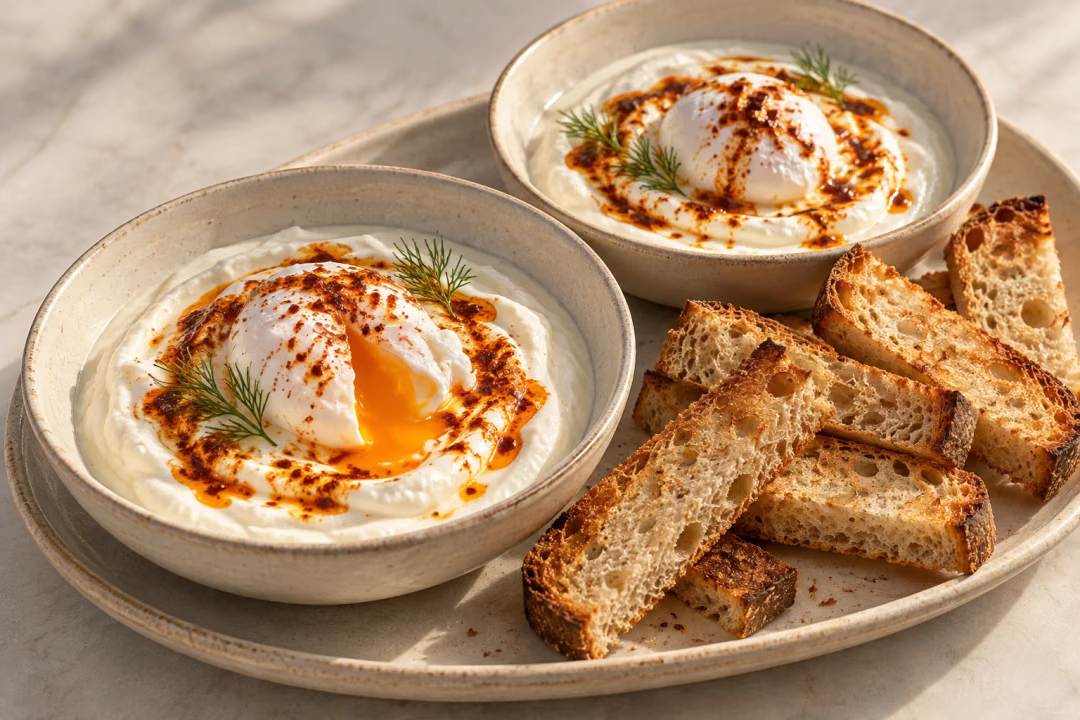
Turkish Yogurt Eggs (Çılbır) with Sourdough
Warm, savory, vegetarian. The recipe serves two, with 150 g Greek yogurt and one egg per person. For a larger egg portion, use four eggs for the batch, giving each person two. Keep the bread fingers for dipping and follow the recipe's fully cooked or pasteurized-egg instructions.
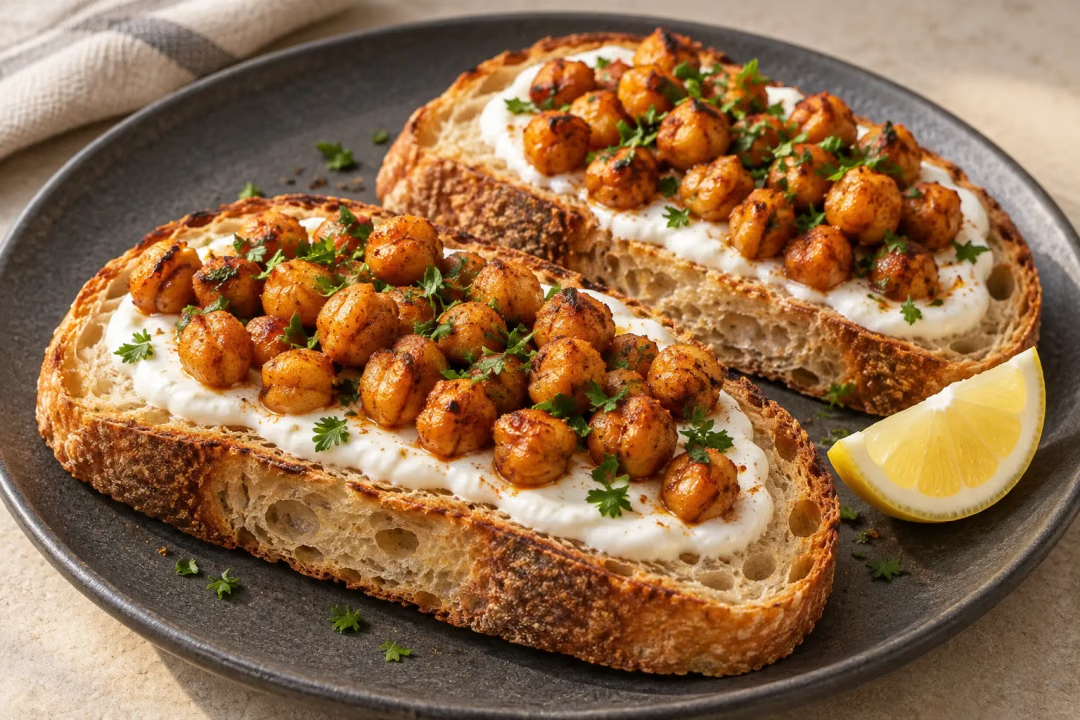
Paprika Chickpea and Yogurt Sourdough Toast
Egg-free and vegetarian. Each original serving has 100 g drained chickpeas and 80 g yogurt. Increase the yogurt to 150 g per person, or 300 g for the two-serving recipe. Roast the chickpeas ahead for convenience; they will soften in storage, so assemble just before eating.

Greek Yogurt Egg Salad Sourdough Sandwich
Savory, vegetarian, useful for packing. The recipe makes two sandwiches, each with two eggs and 30 g Greek yogurt. The eggs are the main protein ingredient; the yogurt binds the filling. For a larger dairy portion, serve 100 g cottage cheese with cucumber on the side. Keep the meal chilled.

Fruit Yogurt Bowl with Cinnamon Sourdough Croutons
Sweet, vegetarian, no eggs. Divide the recipe into its stated two bowls: each starts with 200 g Greek yogurt and croutons made from 40 g bread. No extra yogurt is needed for this suggested portion. Store the croutons separately so they stay crisp until breakfast.

Scrambled Egg and Avocado Sourdough Duo
Warm, savory, vegetarian. This is one generous two-toast plate with two eggs and 50 g cottage cheese. Increase the cottage cheese to 100 g total if you want a larger dairy portion. Keep it on the avocado toast or beside the plate, while the scramble stays warm on its own slice.

Tuna and Egg Salad Sourdough Tartine
Savory, with fish. Originally a lunch plate, this also works for a later breakfast. One plate includes 70 g drained tuna, one egg and 15 g yogurt; the tuna and egg do most of the work here. Keep the vegetable side and use the recipe's chilled-storage instructions for prepared filling.

Pumpkin Cottage Cheese Toast with Cinnamon and Walnuts
Pumpkin purée and cottage cheese make a quick autumn topping, with walnuts for crunch. Choose the recipe’s stated portion and compare your dairy label if tracking protein.

Cottage Cheese Scrambled Eggs on Sourdough
Cottage cheese is mixed into the eggs, with wilted spinach and chives. Cook until fully set and serve as soon as the toast is ready.

Greek Yogurt Chicken Salad Sourdough Sandwich
Use already-cooked chicken in a Greek-yogurt dressing with celery and dill. Keep the filling chilled and assemble the sandwich at lunchtime.
Breakfast questions
Is sourdough bread itself high in protein?
That depends on its ingredients and serving size. Check the specific loaf's label or a calculation for your own recipe. Fermentation and the word sourdough do not establish a protein amount. Here, the deliberate protein portions come from the toppings and sides.
Do all these breakfast recipes have the same amount of protein?
No. They have different ingredients, yields and portion sizes, and no calculated protein totals are provided here. Several serving notes increase the yogurt or cottage cheese. Use the named product labels and your actual portions if you need a total.
What is the quickest option without eggs?
Choose the berry toast with 200 g Greek yogurt, or the cottage-cheese toast with the suggested 150 g portion. Both use cold toppings. For the yogurt bowl, prepare the croutons ahead; making them from scratch adds cooking and cooling time.
Sources behind this guide
These references support the ingredient guidance and food-safety notes. The breakfast combinations and weekly plan are Sourdough Bench’s editorial suggestions.
- Harvard T.H. Chan School of Public Health: Protein
Supports considering the nutrients accompanying protein and using varied protein sources. It does not assess these recipes or establish their protein totals.
- FDA: How to Understand and Use the Nutrition Facts Label
Supports checking serving size before interpreting nutrient amounts and distinguishing a label serving from a recommended portion.
- FDA: Are You Storing Food Safely?
Supports refrigerator temperature and the two-hour or one-hour limits for perishable ingredients.
This guide has not been reviewed by a registered dietitian; linked recipes have not been kitchen-tested by Sourdough Bench. Ingredient weights are suggested food portions, not measured nutrient values. Our editorial policy.