What does the dough need now?
Follow the dough from mixing and folds to proofing, shaping, scoring and steam.
What you can work on.
- Building dough strength without unnecessary handling
- Separating bulk fermentation from the final proof
- Matching shaping and scoring to the loaf
A useful order.
Start with the first guide if this topic is new. If you already have a specific question, choose the guide that matches it and follow its worked examples or observation table.
See the full starter-to-loaf route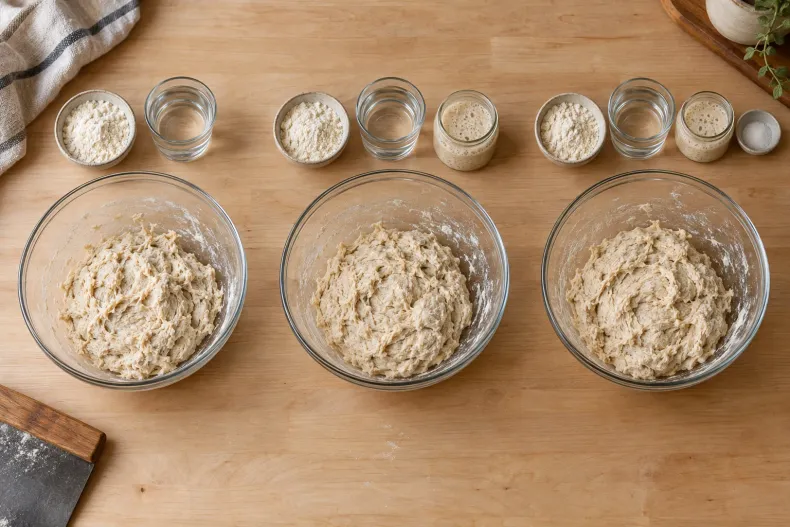 Mixing techniques
Autolyse vs. fermentolyse: choose and account for the rest
Understand flour-and-water rests, starter-inclusive rests, water holdbacks, fermentation timing, and how to judge whether the extra step helps your dough.

Stretch-and-fold vs. coil fold: choose the movement your dough needs
Learn bowl folds and coil folds, how to count sets, read the dough between them, troubleshoot tears, and compare the two methods fairly.
Bulk Fermentation Signs: How to Tell When Sourdough Bulk Is Done
Judge sourdough bulk fermentation with rise, bubbles, strength and dough temperature together—not a single clock time or fixed percent rise.
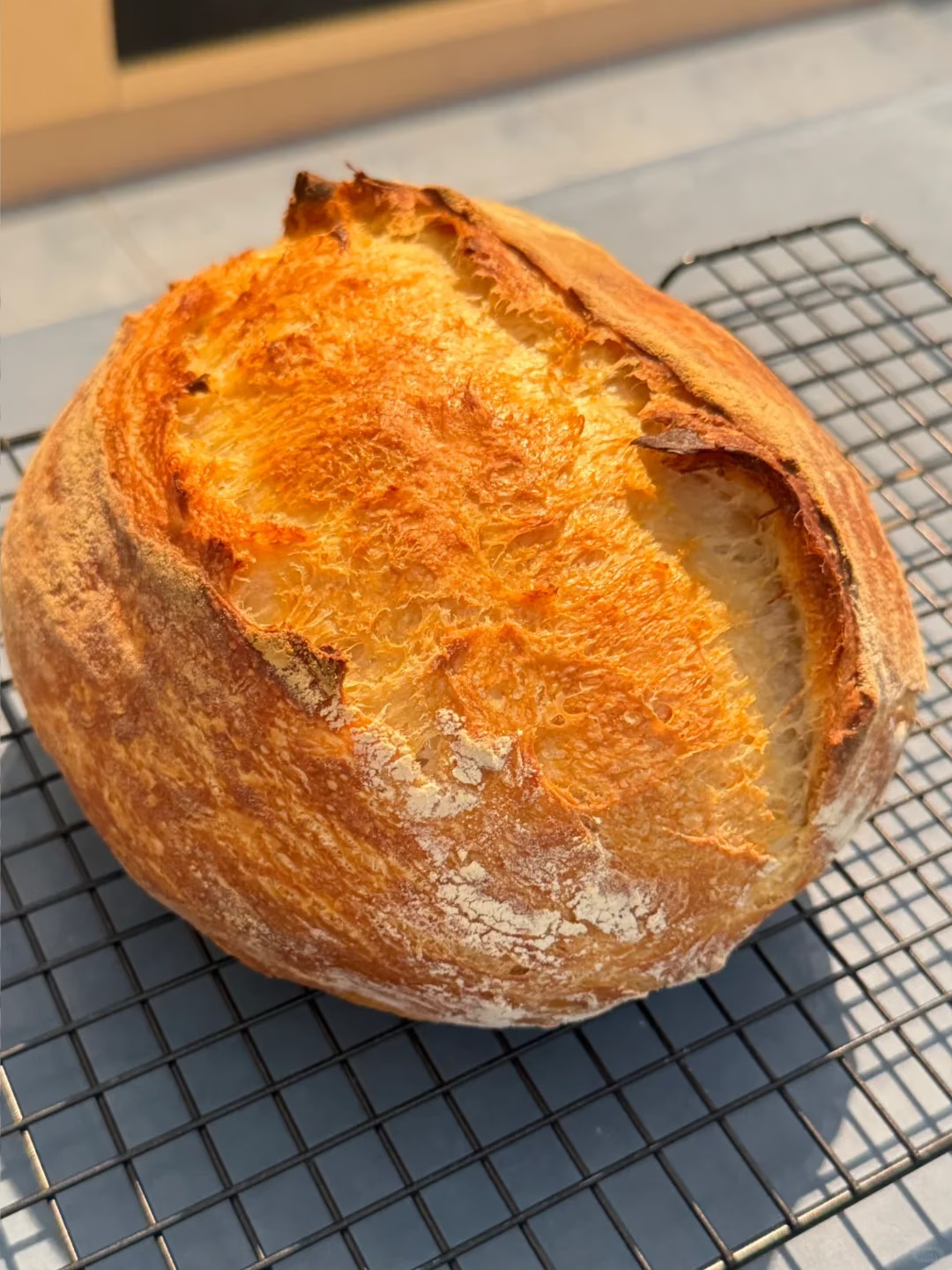
Lean Sourdough Loaves: Simple Flour-Water-Salt Breads
Choose a lean sourdough loaf: baguette, boule, or pan. See how lean dough differs from enriched brioche, then open the formula that already owns that shape.

Enriched Sourdough: Brioche, Cinnamon Rolls, or Soft Slices
Enriched sourdough adds egg, butter, milk, oil, or sugar to flour, water, salt, and ripe starter. Lean dough leaves those out. Choose brioche for a rich loaf, cinnamon rolls for a sweet rolled pan, dinner rolls for a clustered Thanksgiving pan, or the sandwich loaf when you want soft slices. This page only picks the path.
Basic Sourdough Country Loaf: A Lean Formula You Can Repeat
Build a basic sourdough country loaf from total flour, water, salt and ripe starter. Use a worked 860 g ledger, then shape a boule or bâtard.
Sourdough Sandwich Loaf: Pan Formula, Hydration and Slice Texture
Plan a sourdough sandwich loaf for even slices. Compare a lean 65% pan formula with enriched recipes, and match dough weight to the pan.
Sourdough Focaccia: Pan, Hydration, Dimples and Bake Timing
Bake soft sourdough focaccia with a well-oiled pan, high hydration handling, clear dimpling and bake cues. Learn what differs from basket-proofed loaves.
Sourdough Pizza Dough: Hydration, Cold Ferment and Bake Surface
Plan sourdough pizza dough with workable hydration, cold fermentation, 00 flour notes, steel/stone or pan baking, and a yeast-free starter-only path—plus when discard belongs in a leaner dough.
Sourdough Bagels: Dough Strength, Shaping, Boil and Bake Checkpoints
Plan chewy sourdough bagels with the right dough strength, shaping and boiling steps. Learn what to check before you mix so a boule formula is not forced into a ring.
Sourdough English Muffins: Formula Paths, Griddle Cook and Nooks
Plan sourdough English muffins with overnight or same-day timing, griddle cooking for nooks and crannies, and a clear discard-plus-chemical-leaven path when you want a faster batch.

Shape a sourdough boule or bâtard with better control
Plan loaf size, preshape, manage bench flour, form a round or oval, and diagnose problems at the seam, transfer, and basket-release stages.

Cold-proof sourdough with a schedule you can actually follow
Understand refrigerator proofing, cooling lag, dough readiness, covers, direct-from-cold baking, and how to plan sequential loaves without false timing guarantees.
Score sourdough with a clear plan for the loaf’s expansion
Separate functional and decorative cuts, choose a blade and pattern, understand depth and tilt, and troubleshoot a score without blaming one variable.

Bake sourdough with steam using equipment that supports the method
Bake a lean sourdough loaf with the Dutch oven lid on while it expands, then finish lid-off so the crust dries. A covered baker uses the dough’s own moisture, and the minutes depend on loaf weight. Never splash water on a hot glass oven door.
Share this page
The page link does not include your calculator values or notes.