Is my starter ready for the next step?
Build a starter, keep it going, and understand what a feed changes.
What you can work on.
- Starting a culture from flour and water
- Choosing a feed and keeping a reserve
- Returning to a starter after a break
A useful order.
Start with the first guide if this topic is new. If you already have a specific question, choose the guide that matches it and follow its worked examples or observation table.
See the full starter-to-loaf route
How to Make a Sourdough Starter from Scratch
Make a sourdough starter from flour and water with a clear feeding method, jar marks you can read, and decisions for quiet days before the first loaf.

Sourdough Starter Feeding Ratios: Chart & Gram Examples
Read sourdough starter feeding ratios by weight. Compare 1:1:1, 1:2:2, 1:3:3 and 1:5:5 in a gram chart, then size a feed for your recipe and reserve.
How Much Starter to Feed for a Bake (With a Reserve)
Calculate how much sourdough starter to feed so you cover the recipe amount plus a jar reserve. Work in grams with your feeding ratio’s total parts.

Sourdough Discard Recipes: What Discard Is and How to Use It
Learn what sourdough discard is, when it is safe to cook with, and how to plan pancakes, crackers and quick bakes without wasting unfed starter.

Sourdough Discard Pancakes and Crackers: Weights, Scaling and Leavening
Plan sourdough discard pancakes and crackers by weight. Scale a formula to the discard you removed, and keep chemical leavening when the recipe uses it.
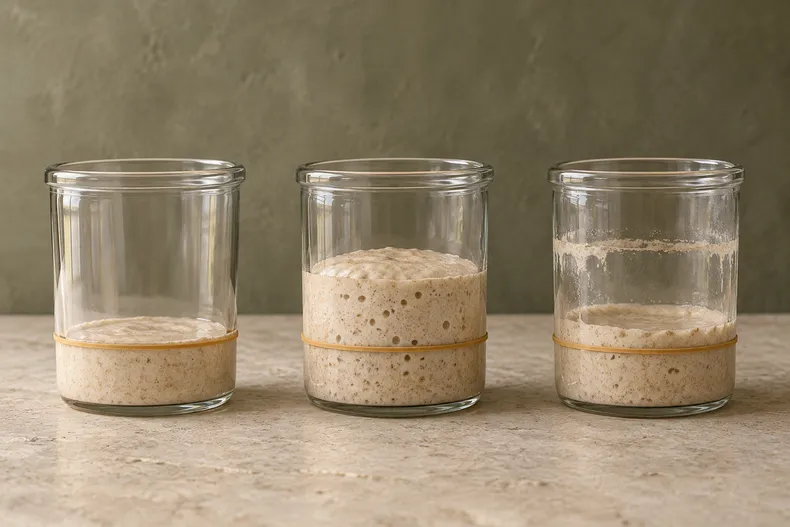 Starter troubleshooting
Sourdough Starter Not Rising? What to Check After Feeding
Troubleshoot a sourdough starter that is quiet, bubbly but flat, or slow after refrigeration. Check its age, feeding weights, temperature and rise history.
Sourdough Starter Hooch: Gray Liquid, Acetone Smell and What to Feed
Read sourdough hooch, a sharp acetone or alcohol smell, and a hungry starter. Separate that liquid from mold, then choose a feeding response.

Mold on Sourdough Starter: What to Throw Out and How to Restart
Tell mold and pink or orange growth from ordinary hooch. Throw out a moldy sourdough starter, clean the jar, and restart from a healthy culture.

Is your sourdough starter ready to bake?
Assess an established starter using its rise history, feeding conditions, and recipe requirements instead of relying on a single bubble or float test.
How to refrigerate and maintain sourdough starter
Set up a practical cold-storage routine, calculate the right maintenance quantity, and prepare refrigerated starter for your next bake.
How to revive a neglected sourdough starter
Separate safe revival candidates from contamination, restore a measurable feeding routine, and decide when a culture is ready for a baking build.
Share this page
The page link does not include your calculator values or notes.