Dough temperature calculator.
Estimate the water temperature for your next mix. After mixing, use the actual dough reading to calibrate a factor for your method.
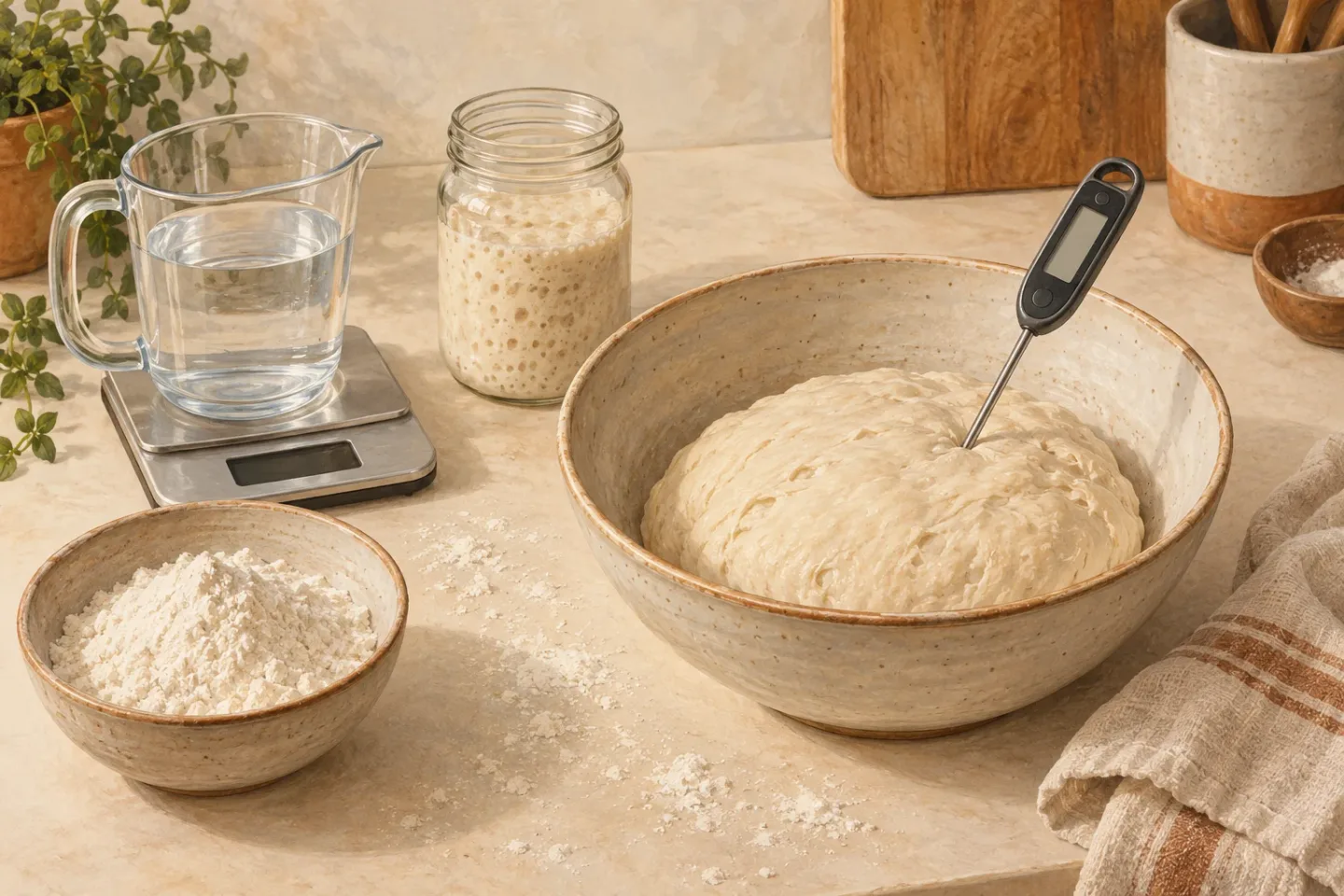
Plan the water. Check the dough.
Start with an example, or enter the readings for your mix. Switch to calibration after you have measured the finished dough.
Estimated mixing-water temperature
4 × 25 − (22 + 21 + 23 + 6) = 28 °C
4-factor method · with preferment
Use this as a starting estimate. Measure the dough after mixing and keep the result with the recipe and mixing method.
Check the highlighted input to calculate a new result.
Paste the record into your bake log’s temperatures and equipment field. Add the recipe, mixer, batch size and mixing time.
Choose the method by what is in the mix.
A mix without a preferment uses three factors. A mix containing a starter, levain or other preferment uses four and includes its temperature. The friction factor is an independent adjustment: setting it to zero does not change the method.
Water = 3 × target dough − room − flour − friction
With preferment:
Water = 4 × target dough − room − flour − preferment − friction
These are empirical bakery estimates. They do not explicitly account for the mass and heat capacity of each ingredient or all the heat exchanged during rests. Use the temperature target and mixing sequence in your recipe, then measure the dough after mixing.
Three examples you can check.
- Without preferment: 3 × 76 − (74 + 72 + 24) = 58°F water.
- With preferment: 4 × 75 − (68 + 68 + 71 + 26) = 67°F water.
- The 25°C example: 4 × 25 − (22 + 21 + 23 + 6) = 28°C water.
The first two examples come from King Arthur Baking’s professional reference; the third matches our water-temperature guide. These are arithmetic examples, not universal targets.
Calibrate with an actual dough reading.
Record room, flour, water and, if used, preferment temperatures. Measure the dough just after the same mixing process. Select “Calibrate from an actual mix” to solve for the friction factor.
Keep that value with the recipe, batch size, equipment, speeds and mixing time. It is a practical correction for that setup, rather than a permanent rating for a mixer. A negative result can reflect heat loss or limits of the model; check the readings before carrying it into another bake.
Degrees and temperature differences.
25°C converts to 77°F. A friction difference of 6°C converts to 10.8°F, without adding 32. The unit switch converts the entered readings and the factor using their respective rules. Δ marks a temperature difference. Empty or invalid entries stay invalid until corrected.
Use the result to plan a measurement, not to decide when fermentation is complete. For a staged mix or an implausible water estimate, recheck the measurements, units and recipe. The tool does not model cooling in your refrigerator or predict a fermentation deadline.
Follow the dough after mixing.
- Read bulk fermentation signs alongside the actual dough temperature.
- Plan cold proofing and record the dough’s condition as it enters the refrigerator.
- Keep a bake log with the planned and actual readings.
- Calculate dough ingredients separately from their temperatures.
Source & method
The factor equations and Fahrenheit examples follow King Arthur Baking’s Dough Temperature reference. Calculations run in your browser. The copied record describes the values you entered; it is not a record of a Sourdough Bench test bake.