Sourdough Focaccia: An Overnight Pan Formula
Sourdough focaccia is a high-hydration dough of flour, water, salt, olive oil, and ripe starter, dimpled and baked in an oiled pan. This slab uses 500 g of flour and an overnight stay in the refrigerator. Pan handling and troubleshooting stay on the focaccia guide.
View saved recipes · Saved on this device.
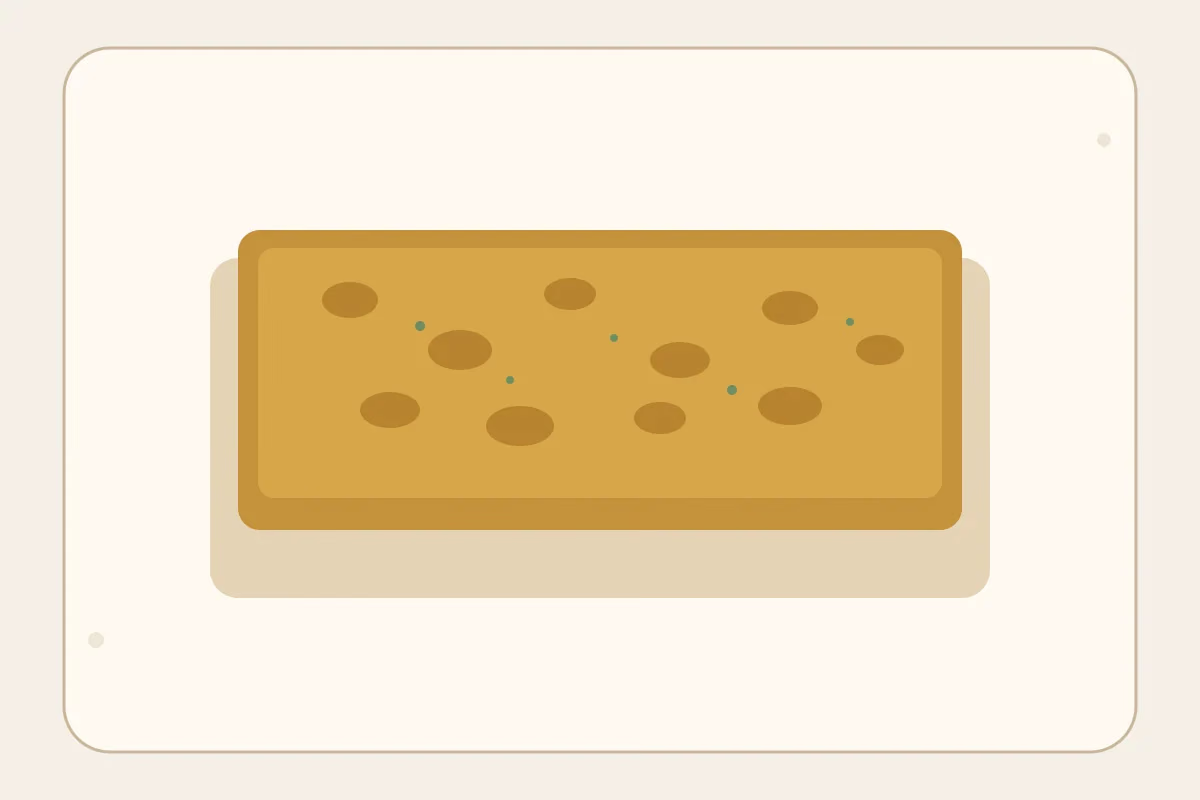
This focaccia is a wet pan dough: bread flour, water, salt, olive oil, and ripe starter. Total flour is 500 g at 78% hydration. Olive oil in the dough is 30 g, and more oil goes in the pan and over the top. The slab is mixed in the evening, refrigerated in the pan, and baked the next day. It is a planning formula, not a record of a Sourdough Bench test bake. Dimple it, then bake it uncovered. Pan handling and a greasy or dense middle stay on the focaccia guide.
King Arthur’s sourdough focaccia is a larger sheet that includes instant yeast and honey alongside starter. This pan uses starter only. There is no commercial yeast and no honey in the ledger. The gram weights are ours. Pizza is a thinner dough with its own formula. A lean hearth loaf is what the steam guide is for. The dough calculator can check flour, water, salt, and starter. It does not treat olive oil as water.
Baker’s percentages for this focaccia dough
| Ingredient | Baker’s % of total flour | Weight |
|---|---|---|
| Total flour | 100% | 500 g |
| Prefermented flour | 20% | 100 g |
| Starter at 100% hydration | 40% by weight | 200 g |
| Water to weigh | 58% | 290 g |
| Total water, including starter | 78% hydration | 390 g |
| Fine salt | 2.2% | 11 g |
| Olive oil in the dough | 6% | 30 g |
| Bread flour to weigh | — | 400 g |
| Dough weight before pan oil | — | 931 g |
Overnight cold ferment in the pan
| When | Stage | What to look for |
|---|---|---|
| Evening | Mix and folds | Two or three folds over about 2 hours, dough smoother and puffier |
| Evening | Pan | 931 g dough in an oiled 9 by 13 inch / 23 by 33 cm pan |
| Overnight | Cold ferment | Covered in the refrigerator for 10–16 hours |
| Morning | Warm and dimple | 45–90 minutes, then dimple when a fingerprint holds |
| Morning | Bake | 425°F / 220°C for 22–28 minutes, top gold and bottom browned |
Sourdough Focaccia: An Overnight Pan Formula
- Makes
- 1 pan
- Prep · estimate
- 35 min
- Cook · estimate
- 26 min
- Total · estimate
- 61 min
Ingredients
- 400 g white bread flour, plus a little for wet hands
- 290 g water, cool or at the temperature you calculated
- 200 g ripe sourdough starter at 100% hydration (100 g flour and 100 g water)
- 11 g fine salt
- 30 g olive oil, mixed into the dough
- 30 g olive oil, for the pan
- 15 g olive oil, to drizzle before baking
- 3 g fresh rosemary leaves, or 1 g dried rosemary
- 2 g flaky salt, for the top
Method
Confirm the starter and the ledger
Use a starter that has risen on a recent feed and smells tangy, not rotten or moldy. Total flour is 500 g. The 200 g starter contributes 100 g of that flour and 100 g water, so prefermented flour is 20%. You weigh 400 g more flour. Water to weigh is 290 g. Total water is 390 g, which is 78% hydration. Salt is 11 g, 2.2% of total flour. Olive oil in the dough is 30 g, 6%. Dough weight before the pan oil is 931 g. The 30 g of pan oil, the 15 g drizzle, the rosemary, and the flaky salt sit outside that dough weight. If your starter is not 100% hydration, rebuild the flour and water split before you mix. Do not add a packet of commercial yeast to keep King Arthur’s clock. Their sheet uses yeast. This one does not.
Mix a wet dough
Stir the starter and the 290 g water together. Add the flour, the 11 g salt, and the 30 g dough oil. Mix until no dry flour remains. The dough will feel slack and sticky. Wet your hands instead of adding a heap of flour. Write down the dough temperature. Use the desired-dough-temperature guide and the dough temperature calculator if you are setting the water on purpose. Do not pour in extra water to chase a number you already passed. 78% is the hydration, oil included only as oil.
Fold it during a short evening bulk
Cover the dough and give it two or three stretch-and-folds or coil folds during about 2 hours at room temperature, until it is smoother and a little puffier. You are not building a tight country-loaf skin. If the kitchen is hot, shorten the gaps between folds and get the dough into the pan before it collapses. This evening time is the start. The overnight cold ferment is the schedule.
Oil the pan and refrigerate overnight
Pour the 30 g pan oil into a 9 by 13 inch / 23 by 33 cm metal pan, or a pan of about that area. Scrape in the 931 g of dough and turn it so the surface is oiled. Gently stretch it toward the corners. If it springs back, cover it for 10 minutes and stretch again. Then cover the pan and refrigerate it for 10 to 16 hours. A cold ferment in the pan is the preferred schedule. Do not leave this dough on a warm counter overnight. Egg is not in the bowl, but the dough is still a wet mass that ferments faster in the heat.
Warm, dimple, and top
In the morning, leave the covered pan at room temperature until the dough looks puffy and a finger pressed into the edge leaves a mark that holds, often 45 to 90 minutes. A cold kitchen takes the longer end. Oil your fingers and dimple the surface firmly, down toward the pan, without punching the dough flat. If the dimples spring shut immediately, it needs more time. If the dough is slack and the prints flood with large bubbles that collapse, it has gone too far. Those calls are on the focaccia guide. Drizzle the 15 g olive oil, then the rosemary and the 2 g flaky salt.
Bake uncovered
Heat the oven to 425°F / 220°C. Bake the pan on a rack in the middle of the oven for 22 to 28 minutes, until the top is gold and the bottom is browned from the oil, not pale and wet. Tent the top with foil if the rosemary darkens before the crumb is set. Do not bake this under a Dutch-oven lid or with a splash of water for steam. That method is for a lean hearth loaf, and the steam guide is where it lives. Cool in the pan for about 10 minutes, then on a rack. Slicing while it is steaming compresses the crumb. Cool it fully before you bag it.
Developed for home use; not kitchen-tested by Sourdough Bench. Times are estimates; use the doneness cues in the steps.
Small things that help
- This formula is the grams, not the pan essay
- Focaccia formula means 500 g total flour, 78% hydration, 2.2% salt, 6% oil in the dough, and 20% prefermented flour, in a 9 by 13 inch pan. If the middle is greasy or dense, or the dimples will not hold, use the focaccia guide. Do not invent a second hydration on this card to fix one bake.
- The dough calculator stops at flour, water, salt, and starter
- Enter 500 g total flour, 78% hydration, 2.2% salt, 20% prefermented flour, and a starter at 100% hydration. You should get 400 g flour to weigh, 290 g water, 200 g starter, and 11 g salt. Add the 30 g dough oil yourself. Do not type the oil in as water, and do not add the pan oil to the hydration.
- Pizza dough is a different ledger
- A focaccia slab is thicker, oilier, and baked in a pan. The pizza recipe is for a stretched pie. Do not pour this 931 g dough onto a steel and call it that pizza.
Make it your own
- Bake it the same day
- Skip the refrigerator. After the folds, pan the dough, let it relax and fill the pan, and dimple when a fingerprint holds, often within 1 to 2 hours if the room is warm. That is a same-day plan. It is not the overnight schedule. Write down which one you used.
- Leave off the rosemary
- The slab is still this formula without the herb. Keep the oil and the flaky salt unless you are logging a separate change. Do not also change the hydration on that bake.
- You only have a smaller pan
- A much smaller pan makes a thicker slab and a longer bake. An 8-inch square pan is a different thickness. Cut the whole ledger in half for that pan rather than cramming 931 g into it. Say so in the bake log. The guide’s point about pan area still applies.
Make ahead & storage
Cool the slab until it is no longer warm. Eat it the day you bake it, or wrap it once cool and keep it at room temperature for a day or two. Freeze portions you will not finish. Do not seal the pan while the bread is hot. If you see mold, throw it away. The mold guide separates that decision from mold in the starter jar, and it is where the fridge-versus-freezer choice lives.
Dietary notes
Ingredients to check
The dough contains wheat flour and olive oil. There is no egg, milk, butter, or honey. Rosemary and flaky salt are toppings. This is not a vegan loaf with a special crust wash. It is a lean dough plus oil, leavened only with ripe starter.
Before you start
Does this focaccia use commercial yeast?
No. The leavening is ripe starter. King Arthur’s published focaccia also lists instant yeast. Do not add that yeast to these grams and keep this clock.
Why is the overnight cold ferment the default?
The pan spends 10 to 16 hours in the refrigerator, then warms before you dimple and bake. A same-day proof is a swap. Write down which schedule you used.
Do I steam the pan?
No. Bake it uncovered at 425°F / 220°C. Steam and a covered baker are for a lean hearth loaf. The oil and the pan are what this formula uses.
Sources & inspiration
- King Arthur Baking: Sourdough focaccia
A published sheet that includes instant yeast and honey with starter, and a long cold rise in the pan. This 9 by 13 inch ledger is starter only, and the gram weights are ours.
- King Arthur Baking: Baker’s percentage
The percentage language used to build the 500 g flour ledger.
- King Arthur Baking: Bread hydration
Hydration is water relative to flour. The olive oil on this card is recorded separately and is not typed in as water.
Recipe writing and serving illustrations are created for Sourdough Bench. Inspiration credits identify the source of an idea; they do not imply that another author tested this recipe. How we publish.


