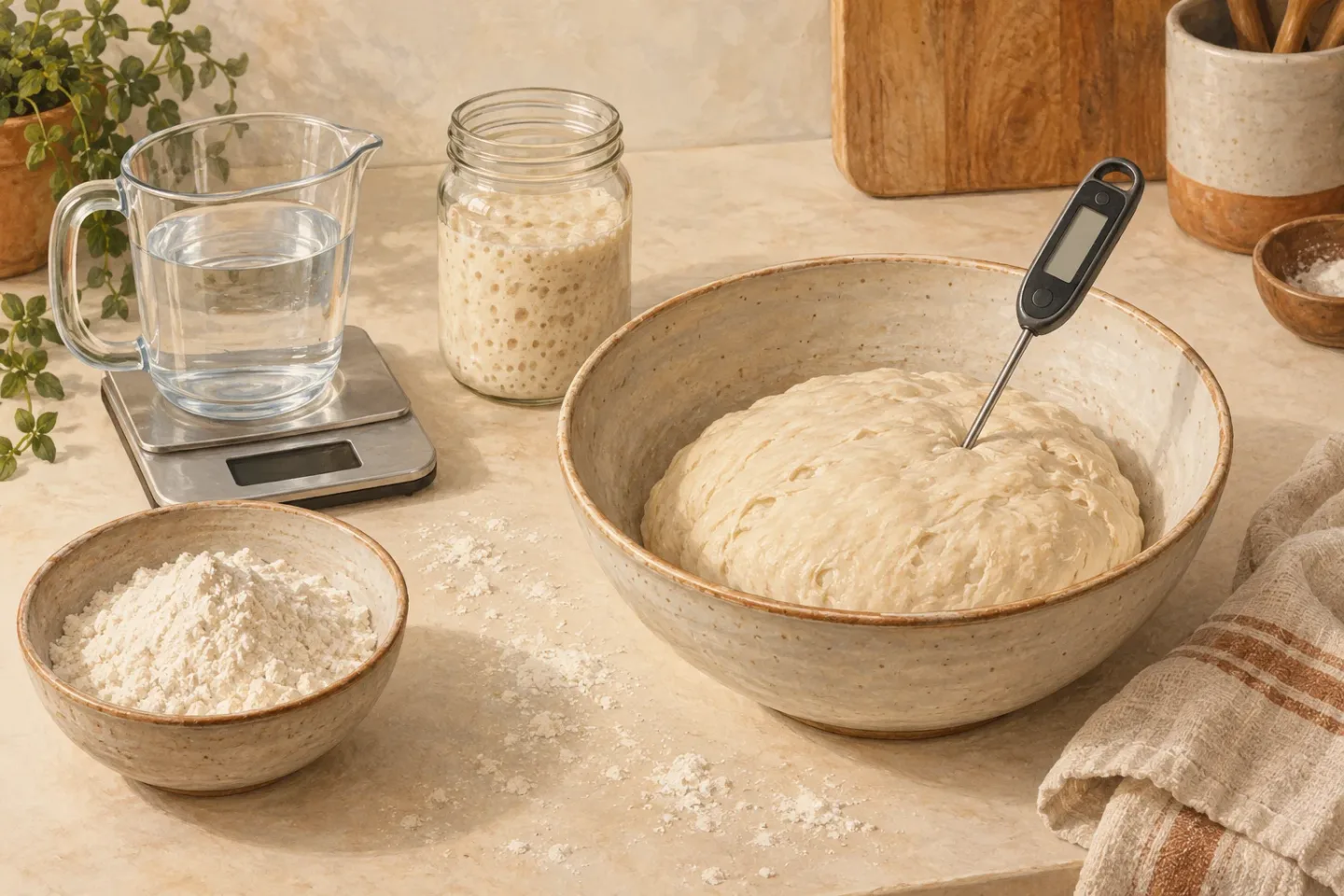
What is desired dough temperature?
Desired dough temperature, often shortened to DDT, is the temperature you want the dough to be just after it is mixed. It is a target for the dough, not a setting on the tap and not a promise about when the loaf will be ready to shape. A recipe that says 75°F / 24°C means the mixed dough, measured with a probe, should land near that number. The water you poured in can be warmer or cooler than that reading. Mixing warms the dough. Cold flour and a cold starter pull it down.
You choose the water because the other temperatures are already sitting there. Flour comes out of the bin at whatever temperature the bin is. The room is the room. A ripe starter is at the temperature of its jar. Friction is the heat the mixing method adds, and you only know it well after you have mixed this dough in this bowl. Water is the lever. Heat it or cool it, within what the recipe and the starter can stand, so the mix lands on the DDT. Then measure the dough. The estimate is not the reading.
Use four factors when the mix includes starter
King Arthur’s dough-temperature reference writes the estimate as a factor method. A mix with no preferment uses three factors: water = 3 × desired dough temperature − room − flour − friction. A sourdough mix that includes starter or levain uses four: water = 4 × desired dough temperature − room − flour − preferment − friction. Setting friction to zero does not switch the method. The method follows what is in the bowl.
These are empirical bakery estimates. They do not weigh every ingredient by its heat capacity, and they do not model a long autolyse or a refrigerator. Use one temperature scale for the whole sum. A friction factor is a temperature difference: 6°C of friction is 10.8°F, and you do not add 32 when you convert that difference. The worked 25°C example on the calculator is 4 × 25 − (22 + 21 + 23 + 6) = 28°C water. That is arithmetic from those inputs. It is not a rule that every dough wants 28°C water.
| What you can change today | What is already set | What you measure after |
|---|---|---|
| Water temperature | Flour temperature | Actual dough temperature |
| Whether you mix by hand or by machine | Room temperature | The friction factor that mix produced |
| How long you mix | Preferment temperature, if you use one | Whether the dough landed near the DDT |
Calibrate friction from the dough you mixed
Friction is not a sticker on the mixer. It is the correction that makes the factor method match a dough you already mixed, with this batch size, this bowl, and this amount of time. After the mix, record the room, the flour, the water you actually used, the preferment if there was one, and the dough temperature. The calculator’s calibration path solves for the factor: friction = factor × actual dough − room − flour − water − preferment, if you used one. A negative result can mean the dough lost heat, or that a reading was wrong. Check the numbers before you reuse it.
Keep that factor with the recipe. A hand mix of 800 g is not the friction factor for a machine mix of 2 kg. There is no second calculator for this. The dough temperature calculator already has the calibration choice. This page is the explanation. The tool is the arithmetic.
DDT does not finish bulk for you
Landing on the desired dough temperature only means the mix started near the temperature the recipe assumed. A warm kitchen, a very active starter, or a lot of whole wheat can still finish bulk sooner. A cold kitchen can take longer even when the mixed dough was exactly 75°F. Read the dough: expansion, bubbles, and strength. Use the proofing time calculator when the dough you have is not at the recipe’s temperature. Use the cold-proofing guide when the next stage is the refrigerator, which is a different temperature problem from mixing water.
Do not chase a clock by pouring hotter and hotter water. Very hot water can damage the starter you just mixed in. If the calculated water is outside the range you can actually use, recheck the readings, the units, and the friction factor before you change the formula. Changing the water’s temperature does not change how many grams of water the hydration calls for. Temperature and baker’s percentage are separate decisions.
FAQ
Is desired dough temperature the same as water temperature?
No. Desired dough temperature is the reading you want in the dough after mixing. Water temperature is the lever you set so the mix can land there. Measure the dough. Do not assume the tap temperature and the dough temperature match.
Where do I calculate the water?
In the dough temperature calculator. This guide does not add a second tool. Use four factors when the mix includes starter, then calibrate friction from the dough you actually mixed.
Will the right water temperature tell me when to shape?
No. It only helps the mix start near the recipe’s temperature. Bulk is judged from the dough, and a cold proof is a separate stage.
Sources & further reading
This guide combines published references with our own explanations and decision aids. Numerical examples are illustrative; they are not records of Sourdough Bench test bakes.
Put it into practice.
Keep the recipe, observations and next change together in your downloadable bake log. For a symptom-led starting point, use the loaf troubleshooting guide.