Sourdough Dinner Rolls for the Thanksgiving Table
Soft sourdough dinner rolls for a Thanksgiving table: an enriched pan of 12 rolls from 500 g of flour, with milk, egg, and butter. Mixed the day before, baked in the morning. Not a second brioche loaf.
View saved recipes · Saved on this device.
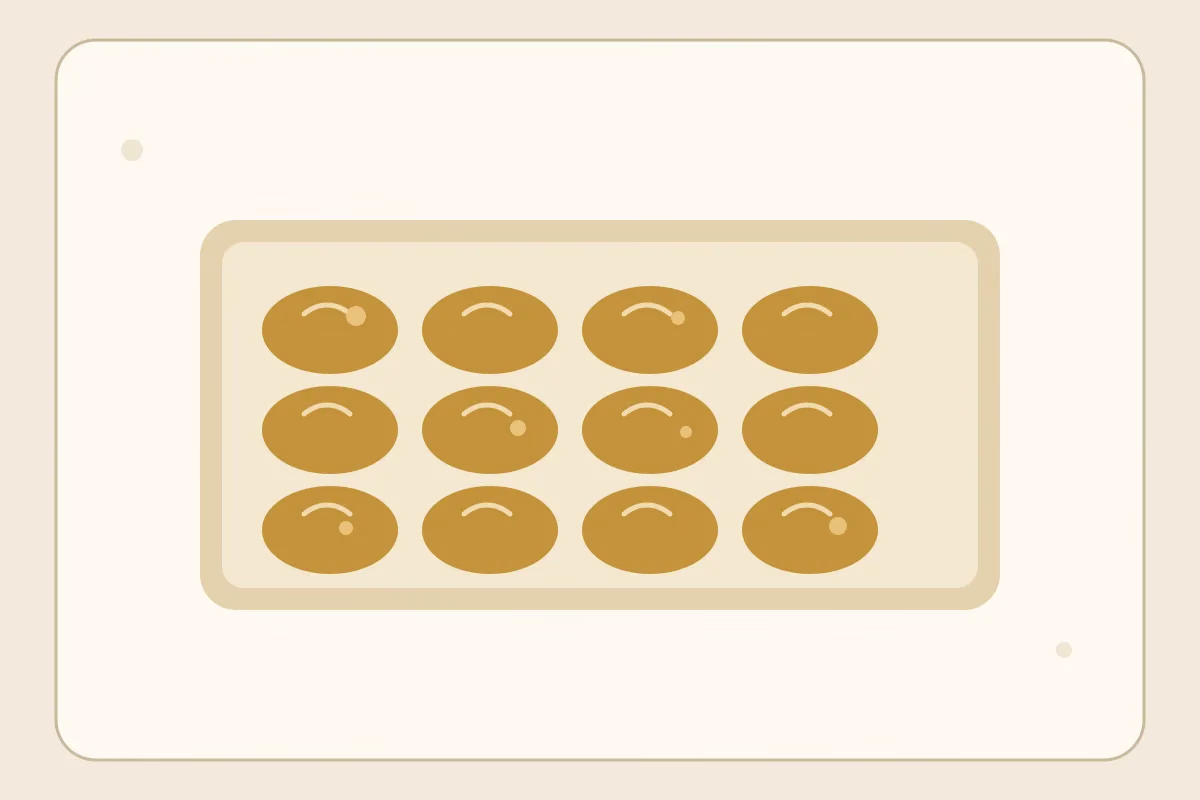
These sourdough dinner rolls are a soft enriched pan for the Thanksgiving table: bread flour, whole milk, egg, sugar, salt, butter, and ripe starter, shaped into 12 rolls that bake touching. Total flour is 500 g. Butter is 20% of that flour. The dough weighs 1000 g before an optional egg wash, about 83 g a roll. It is a planning formula, not a record of a Sourdough Bench test bake.
The prep and cook times on the card are hands-on work and the bake. Bulk fermentation and the overnight cold proof usually add many hours and are not included in those two numbers. The enriched sourdough hub is where this pan sits beside brioche and cinnamon rolls. This is not the brioche loaf with the dough divided, and it is not a lean sandwich slice. King Arthur’s soft sourdough rolls are the published clustered-pan reference, written with Thanksgiving gravy and cranberry sauce in mind. Their formula includes ripe starter plus instant yeast, potato flour, and dry milk. This ledger uses starter only, milk and one egg instead of that potato flour and dry milk, and different gram weights.
Baker’s percentages for these dinner rolls
| Ingredient | Baker’s % of total flour | Weight |
|---|---|---|
| Total flour | 100% | 500 g |
| Prefermented flour | 15% | 75 g |
| Starter at 100% hydration | 30% by weight | 150 g |
| Whole milk | 45% | 225 g |
| Egg | 10% | 50 g |
| Sugar | 8% | 40 g |
| Salt | 2% | 10 g |
| Butter | 20% | 100 g |
| Bread flour to weigh | — | 425 g |
| Dough weight before baking | — | 1000 g |
Thanksgiving overnight schedule
| When | Stage | What to look for |
|---|---|---|
| Day before, morning | Feed the starter | Enough ripe starter for 150 g in the dough, plus a reserve |
| Day before, afternoon | Mix and bulk | About 2–3 hours near 75°F / 24°C, until the dough is puffy |
| Day before, evening | Shape | 12 pieces, about 83 g each, in a greased 9 by 13 inch pan |
| Overnight | Cold proof | Covered in the refrigerator for 8–16 hours |
| Morning | Warm proof | 45–90 minutes, until the rolls touch and look puffy |
| Morning | Bake | 350°F / 175°C for about 20–28 minutes, until the centers are set |
Sourdough Dinner Rolls for the Thanksgiving Table
- Makes
- 12 rolls
- Prep · estimate
- 40 min
- Cook · estimate
- 25 min
- Total · estimate
- 65 min
Ingredients
- 425 g white bread flour, plus a little for the bench
- 150 g ripe sourdough starter at 100% hydration (75 g flour and 75 g water)
- 225 g whole milk, cool or barely warm, not hot
- 50 g egg, about 1 large egg, weighed out of the shell
- 40 g granulated sugar
- 10 g fine salt
- 100 g unsalted butter, soft enough to press but not melted
- 1 egg beaten with 1 teaspoon water, optional egg wash
Method
Build the starter and read the ledger
Use a starter that has risen on a recent feed and smells tangy, not rotten or moldy. Total flour is 500 g. The 150 g starter contributes 75 g of that flour and 75 g water, so prefermented flour is 15%. You weigh 425 g more flour. Milk is 225 g, about 45% of total flour. Egg is 50 g, about 10%. Sugar is 40 g, 8%. Salt is 10 g, 2%. Butter is 100 g, 20%. Dough weight before baking is 1000 g, not counting an optional egg wash. If your starter is not 100% hydration, rebuild the flour and water split before you mix so the totals stay the same. Size that 150 g, plus whatever reserve you want left in the jar, with the starter feeding calculator. Do not type the butter, milk, or egg into the dough calculator as if they were water.
Mix, then take the dough temperature
Stir the starter, milk, egg, sugar, and salt into the flour until no dry flour remains. Knead or mix with a dough hook until the dough is smooth and slightly sticky, not a stiff bagel dough. That may take several minutes. Flour the bench lightly if you are kneading by hand, and do not work in so much extra flour that you leave the 425 g behind. Write down the dough temperature. A useful planning target for a soft enriched dough is about 75–78°F / 24–26°C just after mixing. Maurizio Leo’s soft rolls name 78°F / 26°C as the desired dough temperature for his formula, which uses a tangzhong and a sweet levain this ledger does not. Milk and egg are most of the liquid here, so the dough temperature calculator’s water estimate is a guide for the milk, not a second formula. Warm or cool the milk toward that estimate, mix, then measure the dough. The desired dough temperature guide explains why the reading is the dough, not the milk. Enriched dough ferments more slowly than a lean country loaf.
Work in the soft butter
Cut the butter into tablespoon-sized pieces. With the mixer on medium, or by smearing and folding on the bench, add one piece at a time. Wait until each piece disappears before the next. The dough will look broken and greasy, then come back together into a soft, shiny dough. Scrape the bowl so a chunk of butter does not hide at the bottom. If the butter is melted, chill the dough briefly and try again. Melted butter will not disperse the same way. This 100 g is 20% of the flour. The brioche loaf uses 45% butter on a different ledger. Do not swap those two doughs.
Bulk, then chill overnight
Cover the dough and let it rise until it is puffier and aerated, often about 2 to 3 hours in a room near 75°F / 24°C, longer if the kitchen is cold. You are not waiting for a lean loaf’s doubling schedule. Fold it once if it spreads. Then refrigerate it, covered, for at least 8 hours and up to about 16, so the rolls can be shaped the evening before Thanksgiving and baked in the morning. The chill firms the butter and slows the starter. Egg and milk belong in the refrigerator once the first rise is done. A same-day bake is a different plan: shape after the bulk and proof at room temperature, and do not also leave that pan out overnight.
Shape twelve rolls
Grease a 9 by 13 inch metal pan. Turn the cold dough out. It should feel firm, not greasy and slack. Divide it into 12 pieces of about 83 g. Weigh them and record the actual piece weight. Tighten each piece into a ball and set them in the pan in three rows of four, with a little space between them. Cover the pan. For two smaller pans, split the pieces between two greased 8-inch rounds and start checking the bake a few minutes earlier.
Proof and bake without steam
Let the covered pan proof until the rolls touch and look puffy. After a night in the refrigerator that often takes 45 to 90 minutes in a cool kitchen, longer if the dough is still cold in the center. A pan that spills over the rim and wrinkles is too far along. Bake it rather than punching it down. Heat the oven to 175°C / 350°F. Brush the tops with the optional egg wash if you want a deeper color. Skip the wash for a softer matte crust. Bake about 20 to 28 minutes, until the tops are light gold. King Arthur’s soft sourdough rolls look for about 190°F / 88°C in a center roll. Use that as a cue beside color, and write down the number you actually read. Their formula and pan are not this one, so the clock is an estimate. Tent the pan with foil if the tops are dark before the centers set. Sugar and butter brown fast. Do not steam these rolls the way you steam a lean hearth loaf. Cool in the pan for 10 minutes, then on a rack until the centers are no longer hot. Pulling them apart early smears the crumb.
Developed for home use; not kitchen-tested by Sourdough Bench. Times are estimates; use the doneness cues in the steps.
Small things that help
- Scale every line, including the butter
- Baker’s percentage uses total flour as 100%. To make 24 rolls, double flour, starter, milk, egg, sugar, salt, and butter, and use two pans. The dough calculator can check a flour-and-starter split. It does not know milk, egg, or fat. The baker’s percentage guide is the one that explains the denominator.
- Fifteen percent prefermented flour is not fifteen percent of the dough
- The starter weighs 150 g, which is 30% of the 500 g total flour. Prefermented flour is only the 75 g of flour inside it, or 15%. Read the formula guide if those two phrases have been swapped in another recipe.
- Keep this pan off the brioche project
- Brioche is one rich loaf, with butter at 45% of its flour and a different mix of eggs and milk. These rolls are a softer dinner pan at 20% butter. The enriched hub is the page that keeps those paths apart. Do not roll this dough around cinnamon sugar and call it the cinnamon-roll recipe either.
Make it your own
- Bake them the same day
- Skip the overnight chill. After the bulk, shape the rolls and proof them at room temperature until they touch, often 1 to 2 hours near 75°F / 24°C. Bake the same afternoon. Write down that you did not retard the dough. Egg and milk still need the refrigerator if the shaped pan has to wait.
- Use a little less sugar
- Drop the sugar to 25 g, which is 5% of total flour, and keep everything else the same. The crust will brown a little more slowly. Write the change down. Do not also change the butter on that bake.
- Want a rich loaf or a sweet pan instead
- Use the sourdough brioche for one enriched loaf, or the cinnamon rolls for a sweet rolled breakfast. Do not omit the milk and egg from these rolls and expect the same soft crumb. A lean pan loaf is the sandwich guide.
Make ahead & storage
Cool the rolls on a rack until they are no longer warm. Egg, milk, and butter make this a perishable bread. Keep them covered at room temperature only for the day you bake them, then refrigerate and eat them within a few days, or freeze them. Do not seal them in plastic while hot. Throw the rolls away if you see mold. Trimming a spot is not enough. A cold roll reheats, covered, in a low oven until the center is warm.
Dietary notes
Ingredients to check
These rolls contain wheat, egg, milk, and butter. They are not vegan and they are not a lean dough. The optional egg wash adds another egg on the crust. For a loaf with no dairy and no eggs, use the vegan sourdough loaf.
Before you start
Are these the same as sourdough brioche?
No. Brioche is one rich loaf with much more butter. These are twelve softer dinner rolls at 20% butter, baked touching in a pan. The enriched hub keeps the two formulas apart.
Why does the card say about 65 minutes when the rolls take overnight?
The card counts hands-on work and the time in the oven. The first rise and the overnight chill are extra. Do not expect finished rolls in 65 minutes from a cold starter.
Where do I set the dough temperature?
In the dough temperature calculator, then with a thermometer in the dough you mixed. The desired dough temperature guide explains the target. Milk and egg replace most of the water, so the calculator’s water estimate is a guide for the milk, not a second recipe.
Do I steam the pan?
No. Steam and a covered Dutch oven are for a lean hearth loaf. These rolls bake uncovered at 350°F / 175°C so the tops can brown.
Sources & inspiration
- King Arthur Baking: Soft sourdough rolls
A clustered soft-roll pan written for a Thanksgiving table. Their formula includes ripe starter plus instant yeast, potato flour, and dry milk, and they look for about 190°F in a center roll. The gram ledger here is ours, and it uses starter only.
- The Perfect Loaf: Super soft sourdough rolls
Names 78°F / 26°C as the desired dough temperature for that formula. Their dough uses a tangzhong and a sweet levain. It is the temperature reference, not these weights.
- King Arthur Baking: Baker’s percentage
The percentage language used to build the 500 g flour ledger.
- King Arthur Baking: Brioche formula
A richer yeasted enriched dough. It is the comparison for brioche, not the roll weights.
Recipe writing and serving illustrations are created for Sourdough Bench. Inspiration credits identify the source of an idea; they do not imply that another author tested this recipe. How we publish.


