Fried Egg and Lemon Yogurt Sourdough Toast
Crisp sourdough with smooth lemon Greek yogurt, a fried egg and chives: a savory breakfast with a cool, tangy base.
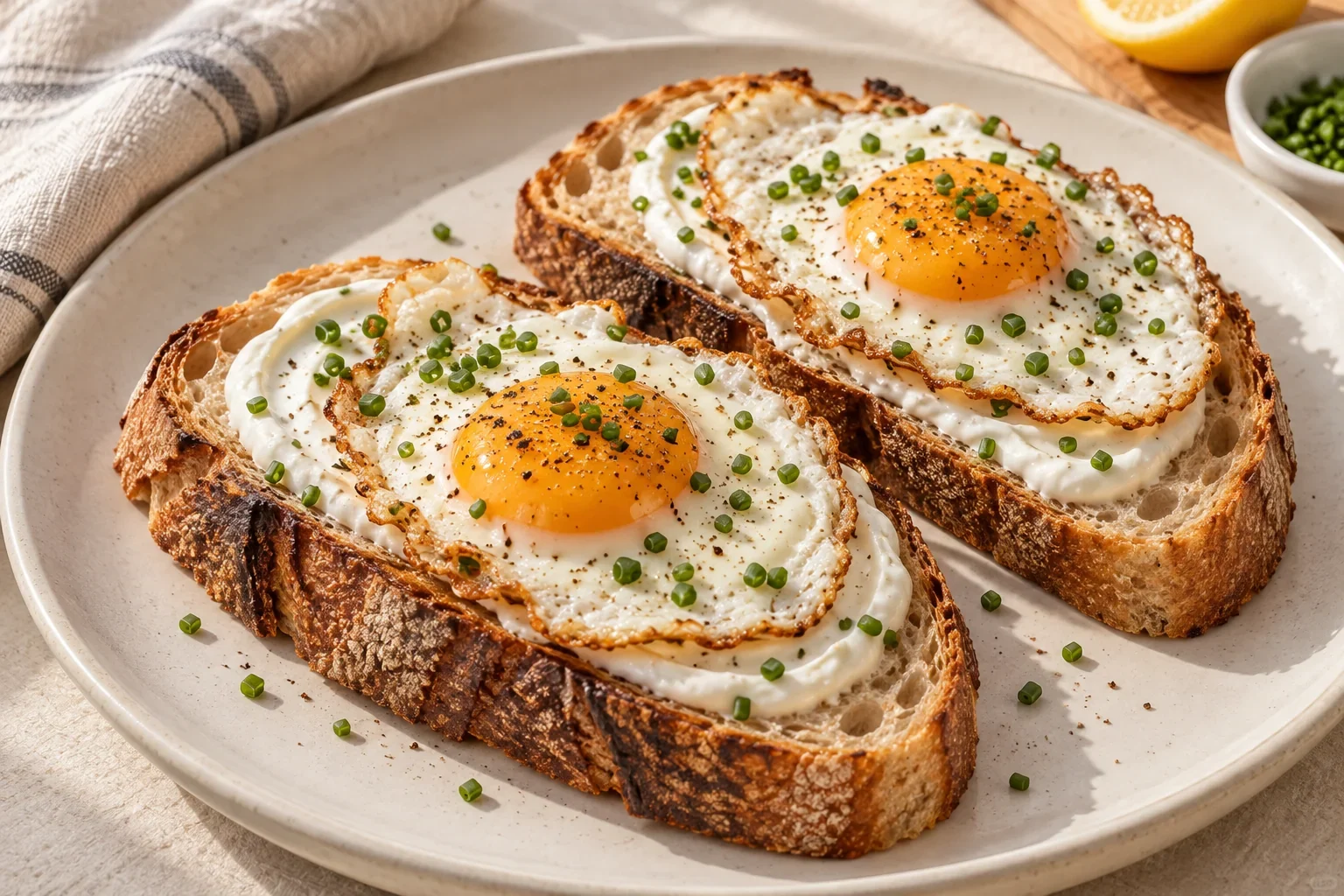
A layer of lemon yogurt catches the warm egg and keeps every bite creamy. Toast the sourdough until its edges are firm, then assemble just before eating so the base keeps its crunch.
Chives give a gentle onion flavor without adding another cooking step. The yogurt stays smooth underneath the egg, with the herbs scattered over the top.
Fried Egg and Lemon Yogurt Sourdough Toast
- Makes
- 2 servings (1 topped toast each)
- Prep · estimate
- 8 min
- Cook · estimate
- 10 min
- Total · estimate
- 18 min
Ingredients
- 2 slices (120 g total) unseeded sourdough, about 1.5 cm / ⅝ inch thick
- 140 g plain thick Greek yogurt
- 2 large eggs; use in-shell pasteurized eggs if serving the yolks soft
- 1 tsp (5 ml) lemon juice
- 2 tsp (10 ml) olive oil, for frying
- 2 tsp finely sliced fresh chives
- ⅛ tsp fine salt
- ⅛ tsp freshly ground black pepper
Method
Mix the lemon yogurt
Stir the yogurt with the lemon juice and salt until smooth. Keep it chilled while you prepare the bread and eggs.
Toast the bread
Toast both sides of the sourdough for about 3–5 minutes, until golden and firm at the edges. Place the slices on plates while you finish the eggs.
Fry the eggs
Warm the oil in a wide nonstick skillet over medium-low heat. Crack each egg into a small cup, then slide it into the pan. Cook for about 3–4 minutes until the whites are completely opaque and set; briefly cover the pan if the surface whites need more time. A soft yolk requires an in-shell pasteurized egg. With ordinary eggs, turn them gently and continue until both whites and yolks are firm, allowing extra time as needed.
Layer and finish
Spread 70 g of the lemon yogurt over each toast. Lift one egg onto each, scatter with the chives and black pepper, and serve immediately.
Developed for home use; not kitchen-tested by Sourdough Bench. Times are estimates; use the doneness cues in the steps.
Small things that help
- Use a thick yogurt
- If liquid has separated in the tub, stir it back in only if the yogurt remains thick enough to spread. A runny yogurt will soak into the bread.
- Keep the heat gentle
- If the underside of the egg is browning before the white sets, lower the heat and cover briefly. Timing varies with the pan and egg size.
Make it your own
- Make the yolks firm
- Use ordinary eggs and follow the fully set option in the frying step. The lemon yogurt provides creaminess even with a firm yolk.
- Use dill instead of chives
- Replace the chives with 2 tsp chopped fresh dill for a more aromatic finish. Keep the lemon and yogurt amounts unchanged.
Make ahead & storage
Best assembled and eaten immediately. You can mix the lemon yogurt a day ahead and keep it covered at 4°C/40°F or below. Keep egg-topped leftovers refrigerated within 2 hours, or 1 hour above 32°C/90°F; reheating soft eggs changes their texture, so cook only the portions needed.
Dietary notes
Ingredients to check
Contains wheat, milk and eggs. Use eggs labeled pasteurized if you want a soft yolk; otherwise cook the yolk and white firm.
Before you start
Can I spread the yogurt before frying the eggs?
Have it mixed and ready, but spread it after the eggs are cooked. This keeps the bread from sitting under a wet topping.
Can I use plain regular yogurt?
Yes, if it is thick enough to stay on a spoon. Strain a loose yogurt in the refrigerator first and weigh out 140 g after straining.
Do I need garlic in the sauce?
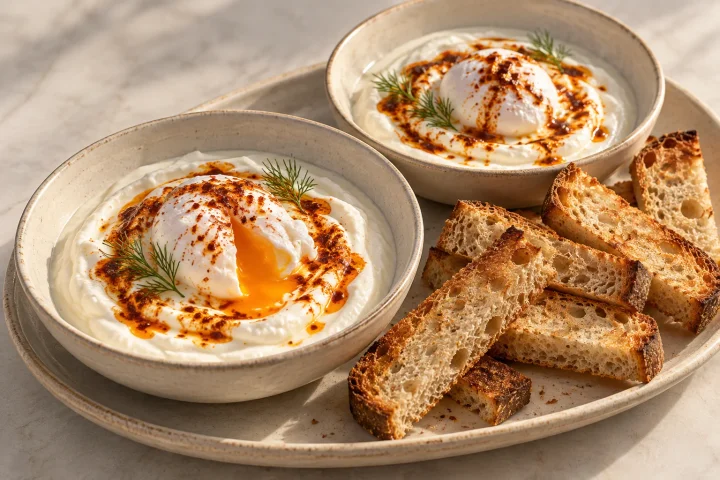
No. This version uses lemon and chives so the fried egg remains the main flavor. The Turkish yogurt eggs recipe uses garlic in a bowl-style serving.
Sources & inspiration
- 热爱生活的侨儿妈呀: Yogurt and egg sourdough pairing
Inspiration for the yogurt, fried egg and crisp bread combination. The original video method was not fully verified; quantities and steps here were developed independently.
- FDA: What you need to know about egg safety
Guidance on pasteurized eggs for recipes served undercooked, fully cooked eggs and immediate serving.
- FoodSafety.gov: Four steps to food safety
Preparation and refrigeration guidance for perishable ingredients.
Recipe writing and serving illustrations are created for Sourdough Bench. Inspiration credits identify the source of an idea; they do not imply that another author tested this recipe. How we publish.