Start with a loaf that rises and bakes reliably, then change one part of its method. Judge the cooled bread: refrigeration, starter hydration and the clock alone cannot promise a particular sourness.
- Choose a recipe variation aimed at your preferred flavor.
- Record one change and compare slices under the same conditions.
Separate tang from the rest of the flavor
Sourdough bacteria produce organic acids, including lactic and acetic acid. Sourness is only part of what you notice: aroma, grain flavor and the baked crust also contribute. A sharper smell does not measure the amount of acid in the bread.
Describe your goal before changing the method: less tang in a sandwich loaf, more tang in a familiar country loaf, or a different grain flavor. Keep rise and texture in the comparison, so extra sourness does not become the only measure of success.
Choose one useful comparison
For a milder first bake, try King Arthur Baking’s milder Pain au Levain variation: it uses bread flour, a levain at its peak before it falls, and a same-day bake. For more tang, start with its assertively sour variation, which combines more rye with a riper levain and a different fermentation schedule. Follow the complete variation before changing one variable yourself.
| Variable | A practical comparison | Keep in view |
|---|---|---|
| Flour blend | Compare a recipe’s white-flour and whole-grain variations. | Grain flavor and dough handling change too. |
| Levain maturity | Use the recipe’s ripe levain consistently; test a later stage only within its guidance. | Record feeding and maturity. Keep the mother starter on its normal care routine. |
| Cold proof | Compare the recipe’s same-day and refrigerated options. | Record the dough’s earlier fermentation; longer refrigeration does not guarantee more tang. |
Do not treat a stiff starter as a flavor setting
Starter hydration describes flour and water, not a fixed acidity. If you try a stiff or liquid build, keep total dough flour, water and prefermented flour consistent first. The starter-hydration guide shows how to make that substitution; it does not predict the flavor or fermentation time.
Compare cooled slices and keep one next change
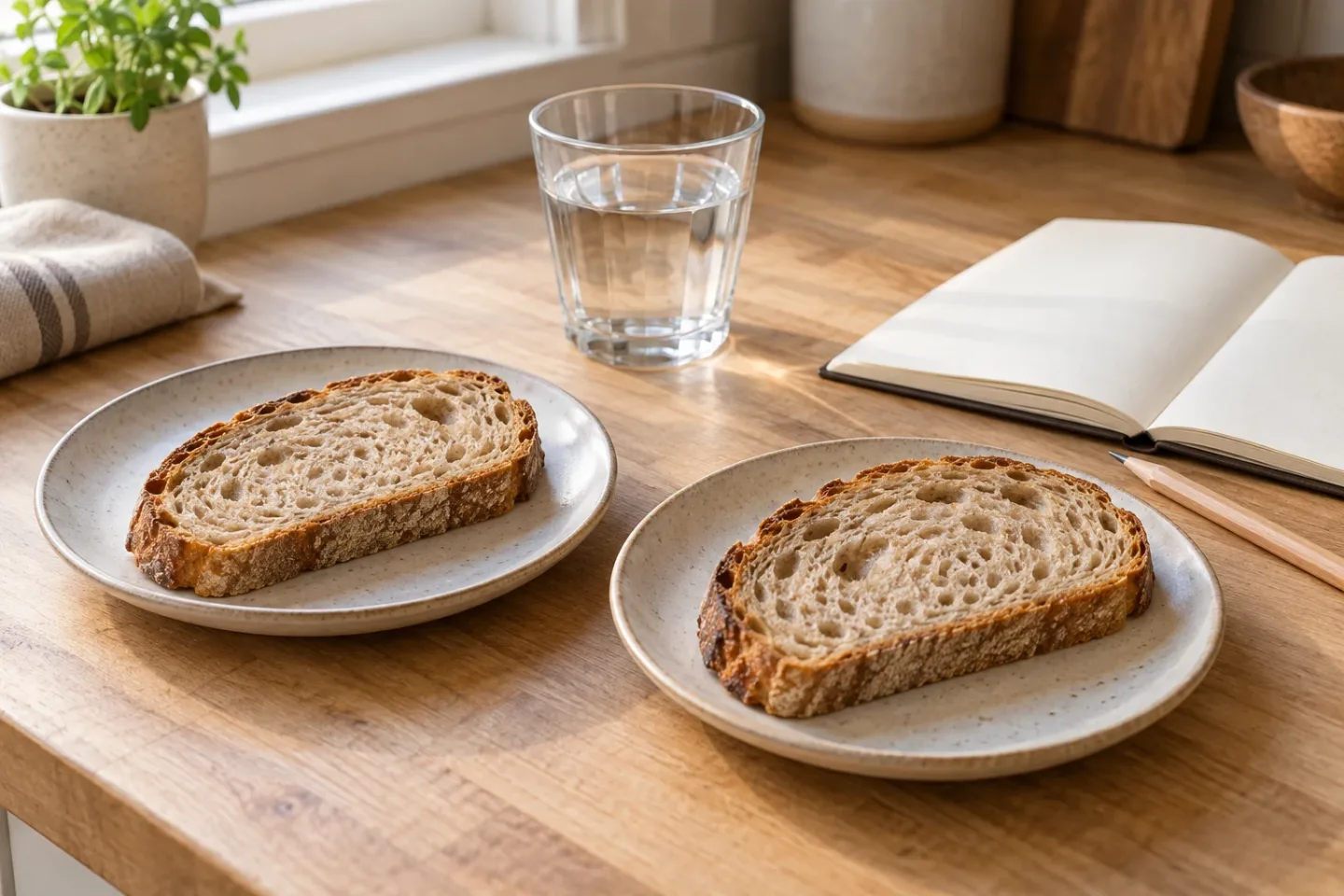
Here is a small home comparison, not a report of a Sourdough Bench test. Bake your familiar version first. On the next bake, change one selected variable while keeping the remaining formula and method as close as practical.
Let each loaf cool before judging it, and compare bread of similar age, at the same serving temperature and without toppings. If someone can code the samples without naming the method, write your impressions before looking at the labels. A second comparison is more useful than a firm rule drawn from one loaf.
- Record the flour blend, starter feed and maturity, dough temperature, and actual fermentation times.
- Note tang, aroma, grain flavor and texture separately. Taste impressions are not pH measurements.
- Choose whether to repeat the change, reverse it or keep the original. If rise or structure worsened, revisit fermentation before extending it again.
Sources & further reading
This guide combines published references with our own explanations and decision aids. Numerical examples are illustrative; they are not records of Sourdough Bench test bakes.
Put it into practice.
Keep the recipe, observations and next change together in your downloadable bake log. For a symptom-led starting point, use the loaf troubleshooting guide.