Avocado, Egg and Dukkah Sourdough Toast
Avocado fans and fried eggs sit on sourdough under a coarse hazelnut, sesame and spice dukkah. Make a small jar of the crunchy topping as you cook.
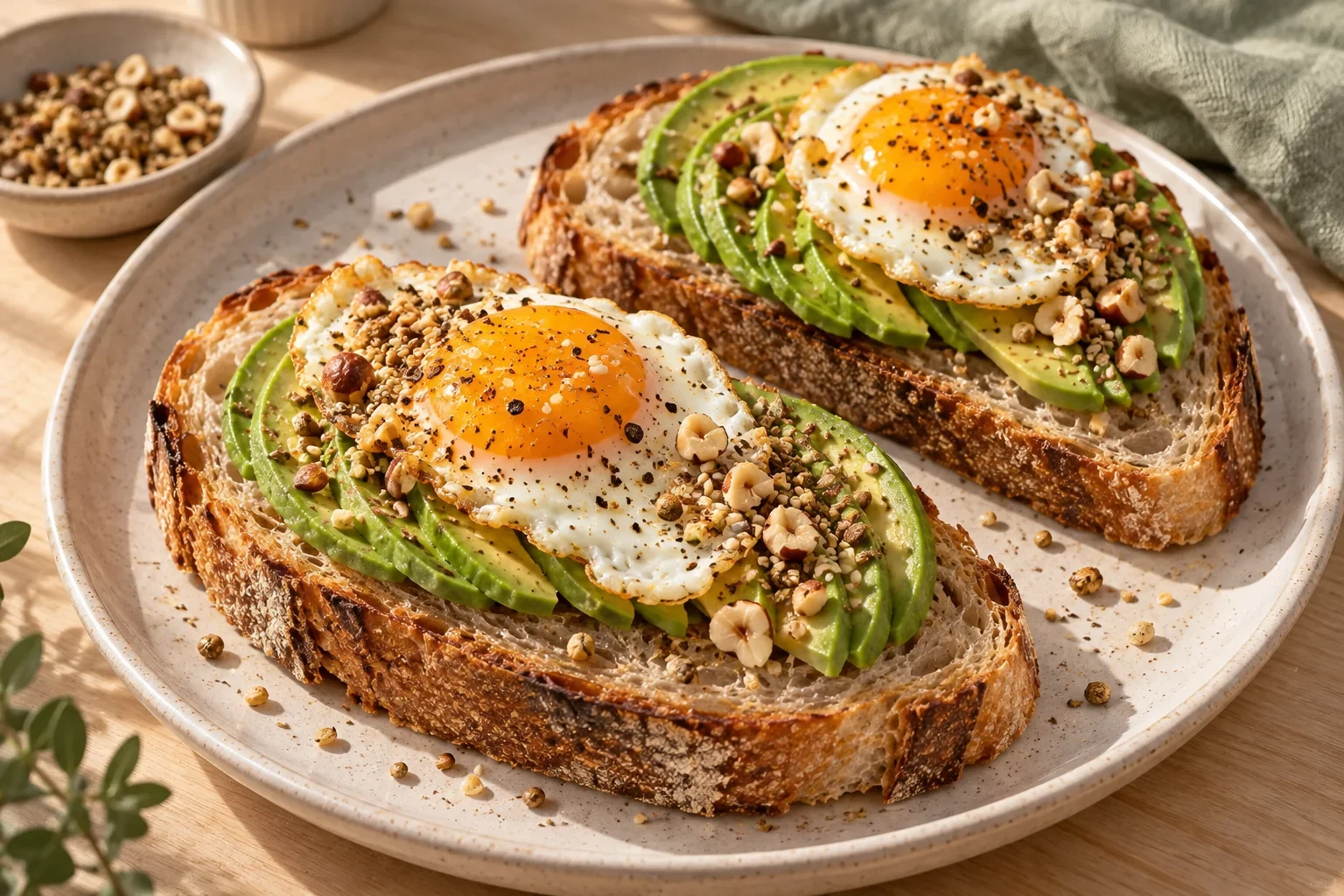
Dukkah is an Egyptian nut-and-spice mixture with a crumbly texture. This small-batch version combines roasted hazelnuts, sesame, coriander and cumin, giving the avocado and egg a crunchy finish.
Crush it coarsely rather than blending it smooth. You will use about half the mixture for two toasts and keep the rest for another breakfast or a bowl of roasted vegetables.
Avocado, Egg and Dukkah Sourdough Toast
- Makes
- 2 servings (1 topped toast each)
- Prep · estimate
- 15 min
- Cook · estimate
- 12 min
- Total · estimate
- 27 min
Ingredients
- 2 slices (120 g total) unseeded sourdough, about 1.5 cm / ⅝ inch thick
- 2 large eggs; use in-shell pasteurized eggs if serving the yolks soft
- 1 medium (about 150 g flesh) ripe avocado
- 1 tsp (5 ml) lemon juice
- 2 tsp (10 ml) olive oil, for frying
- 20 g roasted unsalted hazelnuts, skins rubbed off if loose
- 1 tbsp (9 g) sesame seeds
- 1 tsp coriander seeds
- ½ tsp cumin seeds
- ⅛ tsp fine salt, for the dukkah
Method
Toast the seeds and spices
Place the sesame in a small dry skillet over medium-low heat. Stir for 2–3 minutes until light golden, then tip onto a plate. Add the coriander and cumin to the pan and stir for about 30–60 seconds, just until fragrant. Remove them before they darken and let everything cool.
Make the coarse dukkah
Crush the coriander and cumin in a mortar. Add the roasted hazelnuts and break them into small, uneven pieces. Stir in the sesame and salt. This makes about 30 g; measure out 2 tbsp for the toasts and save the remaining dry mixture in a clean airtight jar.
Toast and slice
Toast both sides of the sourdough until crisp, about 3–5 minutes. Peel and thinly slice the avocado, keeping each half together as a fan. Brush or spoon the lemon juice over the cut surfaces.
Fry two eggs
Heat the olive oil in a wide nonstick skillet over medium-low heat. Add the eggs and cook for roughly 3–4 minutes until the whites have set completely, briefly covering if needed. Soft yolks require in-shell pasteurized eggs. For ordinary eggs, turn and continue cooking until both whites and yolks are firm.
Assemble the toasts
Fan half the avocado over each slice, add one egg and sprinkle each with 1 tbsp dukkah. Serve immediately; keep the extra mixture dry rather than scattering the whole batch over the plate.
Developed for home use; not kitchen-tested by Sourdough Bench. Times are estimates; use the doneness cues in the steps.
Small things that help
- Stop short of a paste
- Use a mortar, or chop the nuts and crush the seeds with a rolling pin in a sturdy bag. A blender can quickly turn the nuts oily and lose the coarse texture.
- Toast sesame separately
- Sesame colors faster than the whole spices. Working separately gives you more control and avoids a bitter topping.
Make it your own
- Use shop-bought dukkah
- Use 2 tbsp of a ready-made mix and omit the homemade mix ingredients. Check its nut, seed and salt content; blends vary.
- Make a seed-only topping
- Replace the hazelnuts with 20 g ready-to-eat roasted pumpkin seeds. This changes the flavor and still contains sesame; check every package if managing an allergy.
- Use firm eggs
- Cook both yolks and whites until firm, or top each toast with one freshly hard-cooked egg cut into thick slices.
Make ahead & storage
Eat the topped toasts immediately. Cool spare dukkah completely, then store in a clean airtight jar in a cool, dry place; use within 1 week for best flavor and use a dry spoon. Keep eggs refrigerated at 4°C/40°F or below until cooking. Refrigerate any perishable leftovers within 2 hours, or 1 hour above 32°C/90°F.
Dietary notes
Nuts, sesame and eggs
Contains hazelnuts, sesame, eggs and wheat. The bread has an unseeded crust, but the dukkah deliberately includes sesame. Check ready-made blends for additional allergens.
Before you start
What is dukkah?
It is a coarse Egyptian condiment made with nuts, seeds and spices, with many variations. Here it adds texture to avocado and eggs; this toast is our own serving idea.
Do I have to roast the hazelnuts again?
No. The recipe starts with ready-to-eat roasted nuts. Only the sesame, coriander and cumin are toasted in the pan.
Can I make only enough for two toasts?
You can halve all the dukkah ingredients, but such small seed amounts are easier to scorch. A small full batch is simpler to toast evenly, and the dry remainder is useful on another meal.
Sources & inspiration
- Ottolenghi: Dukkah background and technique
Primary culinary reference for the Egyptian condiment, toasted ingredients and coarse texture. The small-batch proportions and avocado toast here are independently developed.
- FDA: What you need to know about egg safety
Guidance on pasteurized eggs for recipes served undercooked, fully cooked eggs and immediate serving.
- FoodSafety.gov: Four steps to food safety
Preparation and refrigeration guidance for perishable ingredients.
Recipe writing and serving illustrations are created for Sourdough Bench. Inspiration credits identify the source of an idea; they do not imply that another author tested this recipe. How we publish.