Brisket, Swiss Cheese and Sauerkraut Sourdough Sandwich
Already-cooked brisket, Swiss cheese, squeezed sauerkraut and Dijon fill two hot sourdough sandwiches with crisp, golden outsides.
View saved recipes · Saved on this device.
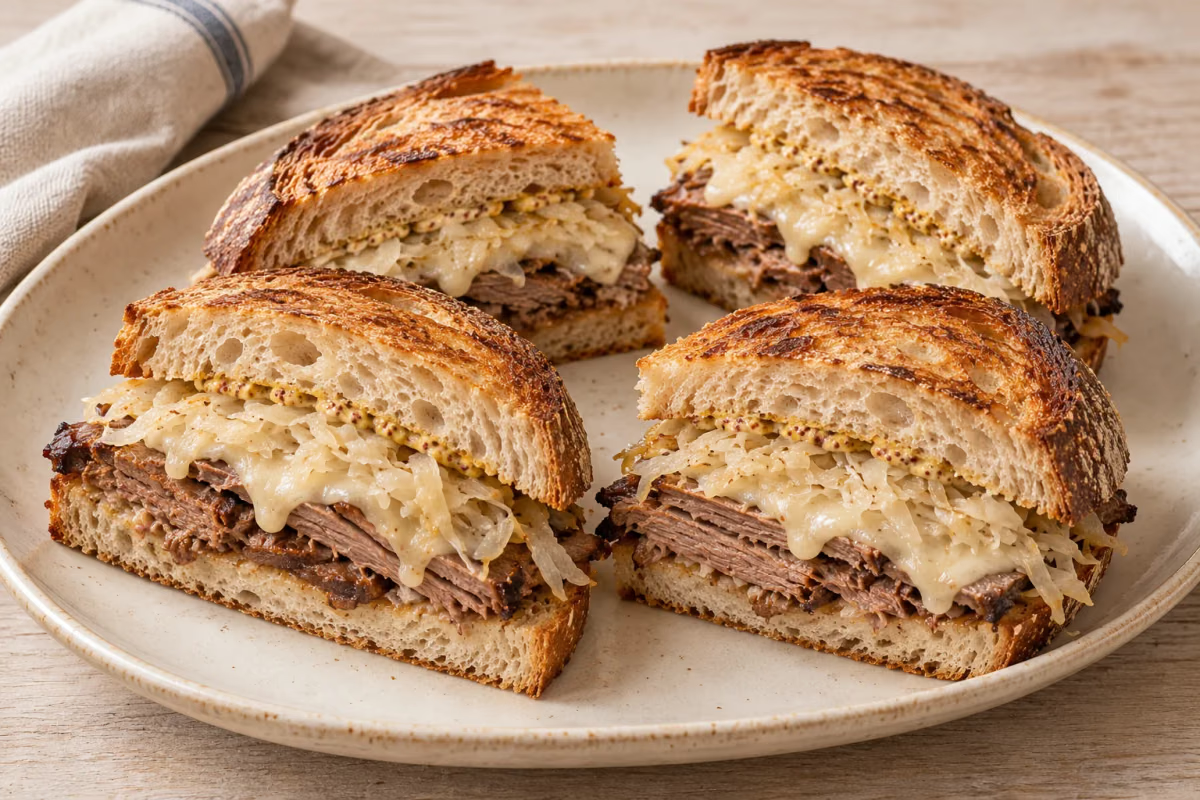
This sandwich starts with fully cooked brisket from an earlier meal or a ready-to-heat pack. The time below covers warming the meat and toasting the sandwich; it does not include cooking a raw brisket.
Squeeze the sauerkraut well and warm the brisket before assembly. That gives the cheese time to melt without leaving a cold middle or a wet bottom slice.
Brisket, Swiss Cheese and Sauerkraut Sourdough Sandwich
- Makes
- 2 servings (1 sandwich made with 2 slices each)
- Prep · estimate
- 10 min
- Cook · estimate
- 15 min
- Total · estimate
- 25 min
Ingredients
- 4 slices (200 g total) unseeded sourdough, about 1 cm / ⅜ inch thick
- 250 g fully cooked beef brisket, chilled, thinly sliced or coarsely shredded
- 100 g Swiss cheese, thinly sliced
- 100 g after squeezing sauerkraut, well drained and squeezed dry
- 2 tsp (10 g) Dijon mustard
- 10 g softened unsalted butter, for the outer bread surfaces
- 2 tbsp (30 ml) water or unsalted beef stock, for warming the brisket
Method
Warm the cooked brisket
Place the already-cooked brisket in a small skillet with the water or stock. Cover and heat gently for 5–7 minutes, separating the pieces and stirring occasionally, until it reaches 74°C/165°F throughout. Follow any stricter pack directions. Let excess liquid evaporate before assembling.
Prepare the bread and kraut
Heat a sandwich press to medium according to its instructions. Squeeze the sauerkraut in clean hands or a sieve, then weigh out 100 g. Spread the butter thinly on one side of each bread slice.
Build two sandwiches
Place two bread slices buttered-side down and spread each inner face with 1 tsp Dijon. Add 25 g Swiss to each, then half the warm brisket and 50 g sauerkraut. Top each with another 25 g Swiss and close with the remaining bread, buttered-side up.
Press until golden
Cook for about 5–7 minutes, until the bread is crisp and the cheese has melted. Close the press gently to keep the filling in place. Cook in batches if the press is small, allowing extra time.
Rest and slice
Rest the sandwiches for 1 minute, then cut each in half to give four halves. Serve immediately.
Developed for home use; not kitchen-tested by Sourdough Bench. Times are estimates; use the doneness cues in the steps.
Small things that help
- Start with tender meat
- The pressing step will not tenderize undercooked brisket. Use meat that was already cooked until tender, and trim away any hard pieces of fat.
- Drain both fillings
- Warm brisket juices and sauerkraut brine can quickly soften the bread. Keep the filling moist but leave loose liquid in the pan or sieve.
Make it your own
- Use a skillet
- Cook the assembled sandwiches over medium-low heat for about 3–4 minutes per side, pressing lightly with a spatula. Cover briefly to help the cheese melt.
- Use Gruyere or Emmental
- Replace Swiss cheese with the same weight of thinly sliced Gruyere or Emmental for a similar melting layer.
- Use cooked pot roast
- Replace the brisket with 250 g tender cooked beef pot roast, drained of gravy. Reheat it to 74°C/165°F before building the sandwiches.
Make ahead & storage
Keep the cooked brisket refrigerated at 4°C/40°F or below and use within its original 3–4-day leftover window, or sooner if the pack says so. Making a sandwich does not restart that clock. Refrigerate perishable leftovers within 2 hours, or 1 hour above 32°C/90°F, and reheat the center of a stored sandwich to 74°C/165°F.
Dietary notes
Ingredients to check
Contains wheat, milk and mustard. Cheese, brisket seasoning, sauerkraut and Dijon can all add salt, so this recipe adds none.
Before you start
Can I put cold brisket straight in the press?
Warming it first gives better control. A sandwich can brown outside while the meat remains cold, especially with thick slices or a generous filling.
Should I rinse the sauerkraut?
Taste a small amount first. If it is very salty or sharp, rinse briefly and then squeeze it well; weigh the 100 g after squeezing so the sandwiches stay balanced.
Sources & inspiration
- FoodSafety.gov: Safe minimum internal temperatures
Cooking temperatures for meat and poultry, steak resting time and reheating leftovers.
- FoodSafety.gov: Cold food storage chart
Refrigerated storage guidance for cooked meat, poultry, eggs and prepared salads.
- FoodSafety.gov: Four steps to food safety
Separating raw and ready-to-eat ingredients, refrigeration and time limits for perishables.
Recipe writing and serving illustrations are created for Sourdough Bench. Inspiration credits identify the source of an idea; they do not imply that another author tested this recipe. How we publish.


